
Timeline Test styling
51 Years of The Festival
The inaugural Festival celebrated the official opening and dedication of the 1820 Settlers Monument Building. Operating as a living monument to the cultural heritage of all South Africans, the building contains numerous venues, from a spectacular 1000 seater auditorium to small meeting rooms, including a fully functional kitchen, banqueting area, bar and coffee shop. The Monument is the centre of operations for the National Arts Festival, the Grahamstown Foundation, SciFest Africa, the National Schools Festival, the English Olympiad, and many more! During the National Arts Festival, it is one of the main hubs of activity. In 1974, the Festival ran…Read More
Students protested the forced use of Afrikaans as a medium of instruction. The police violently suppressed the protest, leading to hundreds of deaths and galvanizing the international anti-apartheid movement.
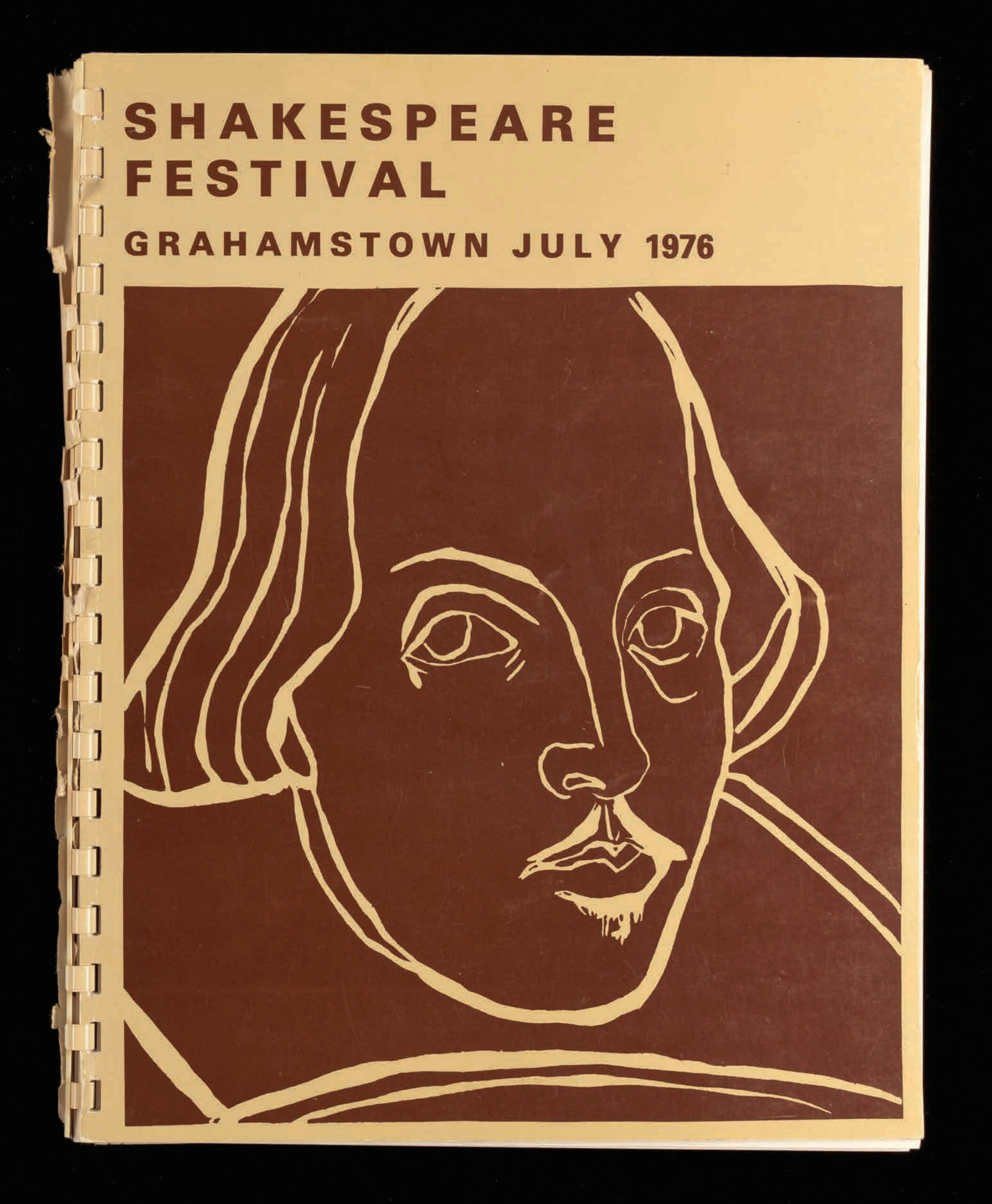
1976’s festival was officially called the Shakespeare Festival. As the name suggests, the programme was focused on fostering an appreciation and enjoyment of Shakespearean drama, and included performances and films of an incredible variety of his works, from Richard III, Macbeth and Othello to A Midsummer Night’s Dream, Romeo & Juliet and Love’s Labours Lost. But it wasn’t just the classics on offer. Dawn Lindberg returned to our stages with The Shrew – a reimagining of The Taming of the Shrew, written by Charles Marowitz. Two plays authored by Pieter Dirk-Uys – already a formidable talent, though not yet a…Read More
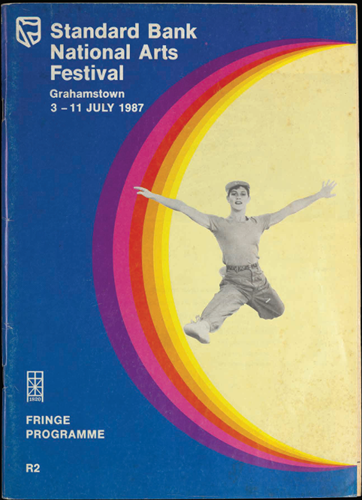
After three years of successful festivals, there was some debate as to whether another would be possible in 1977. Economic recession and petrol rationing, to say nothing of a tumultuous political situation, had led to financially challenging times across the country. The programme’s opening note, by Professor Guy Butler, explains the motivation to forge ahead: “The current recession and the advent of petrol rationing caused the Festivals Committee and the Council of the Foundation to question whether the Festival should not be abandoned until the economy recovers, but they concluded that it would be short sighted to lose the momentum…Read More
Anti-apartheid activist and leader of the Black Consciousness Movement, Steve Biko, died in police detention. His death led to increased international pressure and sanctions against the apartheid regime.
With a naming sponsorship from Sharp Electronics, the 1978 Sharp Festival of the Arts was able to recapture some of its earlier ambition. The Fine Arts took a front seat, as one of the Monument Building’s primary functions – as an exhibition space – was able to be fully realised for the first time. Curated by Linda Goodman of the Goodman Gallery, the Monument’s galleries were officially launched with an exhibition that featured the likes of Leonard Matsoso, Cecil Skotnes, Andrew Verster and Raymond van Niekerk. The Rehearsal Room – still a popular venue today –housed lectures delivered by Cecil…Read More
This time called the Five Roses Festival of the Arts after a new sponsorship, the 1979 Festival was produced in collaboration with the then-named Department of National Education. The effect of this collaboration is self-evident in the programme for this year which, in addition to what had become the regular offering of gala concerts, orchestras, and films, emphasized another strong Student Festival and a prominent series of Winter Schools. Then, as now, student theatre was often daring, experimental, and prone to pushing the boundaries of traditional modes of theatre practice. The printed programme for this year contained a fascinating disclaimer:…Read More
1980 was perhaps the first time that the then-named Five Roses Festival of the Arts had a programme that so closely resembled the structure of the National Arts Festival today. The curated programme was filled with Classical Music, Jazz, Opera, Fine Arts Theatre, and Film, and with artists who have continued to make regular appearances on our stages to the present day. Waiting for Godot, to name but one example, played at the Rhodes University Theatre, with a phenomenal cast that included the likes of John Kani, Winston Ntshona and Pieter-Dirk Uys. Jazzart, South Africa’s oldest dance company, made their…Read More
The Festival headed into the 80’s with an increasingly strengthened sense of identity and purpose. For the first time called the ‘National’ Festival of the Arts, the importance and scale of the work done annually in Makhanda was beginning to solidify in the artistic community. Mr DM Hopkins, then Chairman of the Festivals Committee, expressed some of this vision in his foreword to this year’s programme: “To enrich the educational and cultural development of the peoples of South Africa” is the objective adopted this year by the 1820 Foundation as its aim for the eighties. Proud objectives need to be…Read More
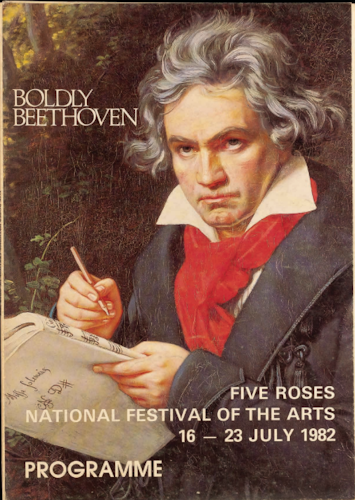
From the time of its inception, the curated programme has always been organised around a central theme, idea or artistic thread. With the guidance and vision of the Artistic Director, these central ideas guide the selection and curation of work, culminating in a programme that feels fresh and distinct each year, and reflects the artistic achievements of the past, contemporary creative innovations of the present, and visions for the future. In 1982, the central idea of the Curated programme was The Beginnings and Growth of 19th Century Romanticism. In particular, the music of Beethoven was a focal point, with renditions…Read More