Timeline Test styling
51 Years of The Festival
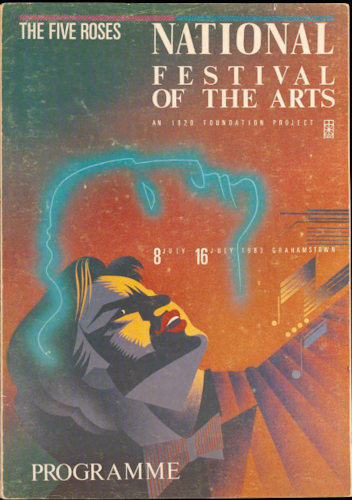
1983 was a milestone for the National Arts Festival and its ability to showcase and promote indigenous artists. Whilst the Festival has always welcomed art and artists from all backgrounds, ethnicities and cultures, 1983 marked the first year that the Festival was able to place these voices firmly in the centre of the programme. Dudley Hopkins, the Chairman of the Festival Committee, addressed the question of racial representation – then a radically contentious issue in South Africa – directly: “…the spotlight this year focuses in the main on South Africans – both living and dead. It has long been our…Read More
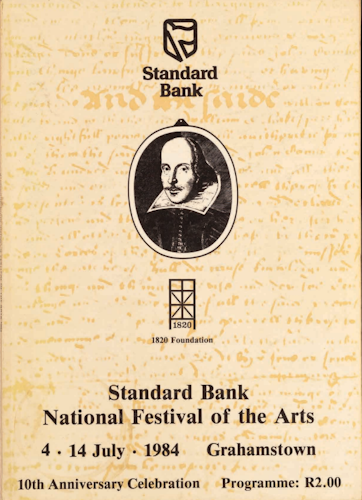
Affectionately called the Festival of Celebration within the arts community, the 1984 Festival marked the 10th anniversary of the National Arts Festival. It was also the beginning of a long and mutually beneficial partnership with Standard Bank, who took over as the primary sponsors. Now known as The Standard Bank National Festival of the Arts, the scale of the Festival programme increased dramatically, both to celebrate the achievement of a decade’s worth of dedication to the Arts, and as a result of how popular the festival had become with artists and audience members alike. In tribute to its origins and…Read More
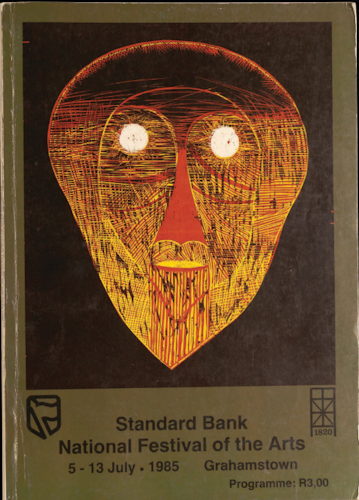
The Festival’s commitment to honouring South African artists and to providing a platform for South African voices continued into this, its second decade. The programme for the 1985 Standard Bank National Festival of the Arts, with a cover designed by Cecil Skotnes, is packed with names and titles familiar to seasoned audiences and newcomers alike. John Kani, fresh from a critically acclaimed season in London, returned to our stages with Danny Keogh and Dorothy Ann Gould in Harold Pinter’s One for the Road, while James Borthwick joined the cast of Paul Slabolepszy’s Under the Oaks and Over the Hill. Sidwill…Read More
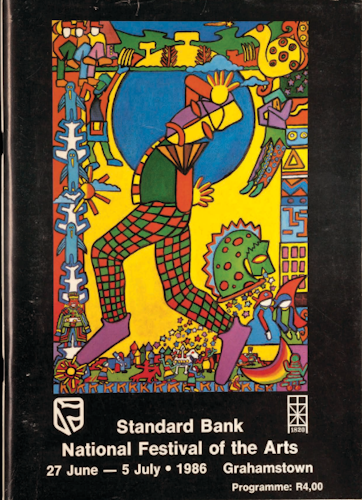
1986 was a year marked by social and political turmoil in South Africa. Amidst the collapse of the Rand, protest action against racial segregation laws, and increasing levels of violence between the state and civilians, the Festival programme was arranged around the theme ‘Encounters’. Although the Festival has always striven to remain apolitical itself, we have always stood for justice, equality, human rights, and open access, and the ‘Encounters’ programme attempted to create a space that welcomed and celebrated all voices. The introductory notes from several key players in the organisation demonstrate the challenges faced, and opportunities seized, by the…Read More
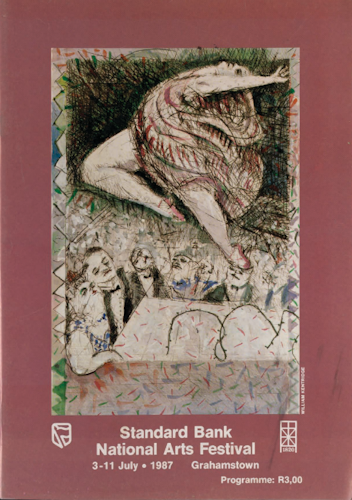
As civil unrest continued into 1987, the Festival continued to use its platform to promote diversity and inclusion for all South Africans. The value of the work done in the artistic sector at this time was profound, and was encapsulated beautifully by Jan Breitenbach’s introduction to the 1987 Festival: “In these times of social, political and economic uncertainty in South Africa the 1820 Foundation feels privileged to present the exciting Standard Bank National Arts Festival. The programme which has been compiled is well-balanced and stimulating – and perhaps more importantly, it transcends all the barriers which divide our people, because…Read More
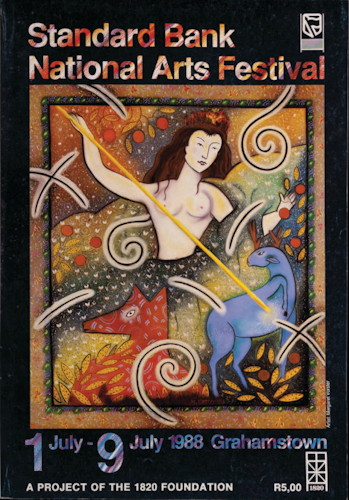
With South Africa still being governed under a State of Emergency, the continued celebration of the National Arts Festival was a complex matter. Without wishing any festivities to appear insensitive to, or detached from, the immense hardships being experienced around the country, the Festival was mindful of the opportunities that it was able to provide – not just artistically and financially, but by providing a platform for diversity and free expression. In introducing the 1988 programme, the Chairman of the Festival Committee wrote: “Grahamstown, because of its topography and the plight of the less privileged in the depressed Eastern Province,…Read More
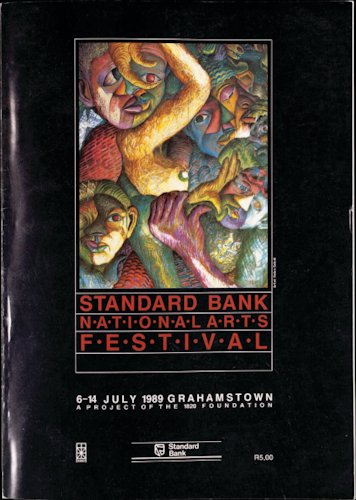
If art is a mirror for society, then the 1989 National Arts Festival reflected a collective certainty that change in the country’s political regime was imminent. Although the Festival is apolitical, this year’s programme contains hints of the democratic future that lay just around the corner. For the first time, contributors to the programme referenced the post-Apartheid era as a certainty, and the Festival celebrated its ability to provide a platform for free speech, open discourse, and continued meditations on the past and future. Standard Bank continued as a main sponsor and Dr Conrad Strauss, in his Festival Message, wrote:…Read More
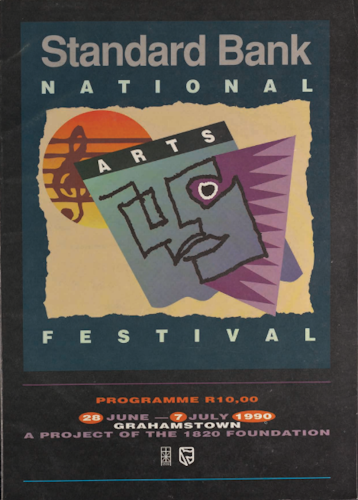
At the start of the new decade, the National Arts Festival naturally reflected on its growth over the preceding fifteen years. In his Festival Message, Professor Alan Crump – Chairman of the Festival Committee – reminded festival goers that the Fringe had begun with just five events in 1978! There were 21 events in the 1982 Fringe programme, and by 1989 had over 330 events. That year saw the sale of 60 000 Fringe tickets, an increase of 44%, while the Main Festival’s ticket sales grew by 32%. Such promising growth and scale placed the Festival unequivocally amongst international events of…Read More