Timeline Test styling
51 Years of The Festival
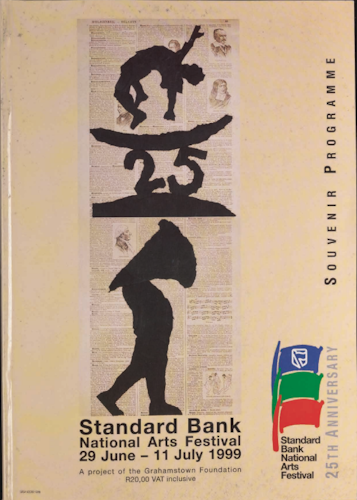
To mark the occasion of the 25th anniversary of the National Arts Festival, the programme opened with an address from a very special patron: “As patron of the 1999 twenty-fifth anniversary Standard Bank National Arts Festival, it is a pleasure to welcome festival-goers to Grahamstown. Over the years, the arts have played a critical part in bringing together South Africans of all social, economic and community groupings. Under the auspices of the Grahamstown Foundation, the National Arts Festival has grown from small beginnings in 197 4 into one of the best-known arts festivals in the world. The organisers have pursued…Read More
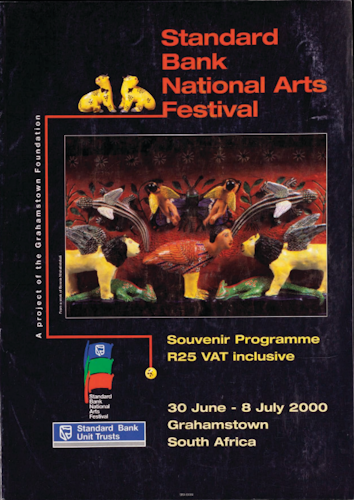
The first festival of the new millennium contained an incredible 227 live performances! The festival committee in that year was a powerhouse of well-known professionals, including: Mannie Manim, Guy Butler, Richard Cock, Marthinus Basson, Khayalethu Lennox Faba, Ingrid Fiske, Vicki Karras, Melanie Hillebrand, Sibongile Khumalo, Mokale Koapeng, Ramolao Makhene, Tale Motsepe, Sydney Selepe, Lara Foot, Andrew Verster, Trevor Steele Taylor, and Peter Voges. The State Theatre Ballet presented The Merry Widow, and the City Theatre and Dance Group staged Robyn Orlin’s ‘daddy, I’ve seen this piece six times before and I still don’t know why they’re hurting each other.’ This…Read More
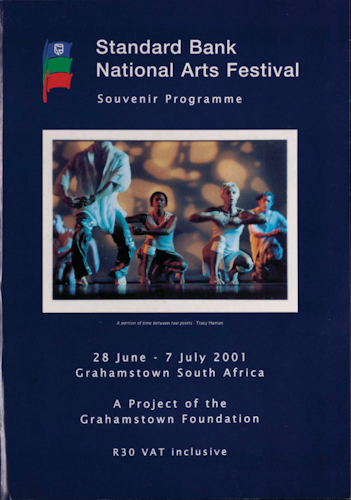
2001 was the 18th, and final, year of the Standard Bank National Arts Festival. The bank continued its sponsorship of the festival in several more niche areas, but was no longer the named sponsor of the Festival as a whole. Standard Banks CEO wrote a farewell of sorts, commemorating the banks long partnership with the National Arts Festival and the Grahamstown Foundation: “The long association with this Festival has been richly rewarding for the bank. It has enabled us to enjoy a strong association with philosophies and pursuits which have a positive bearing on our organisation. We have enjoyed being…Read More
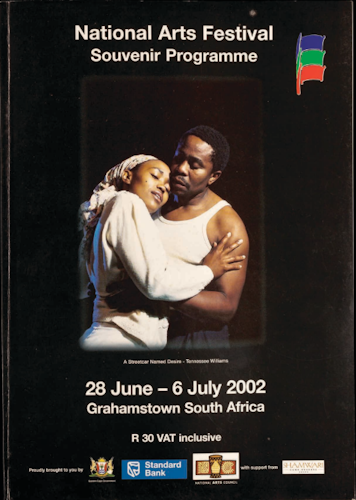
As had been hoped, new sponsors were able to step into play as Standard Bank withdrew. In 2002, and for the first time in its history, the National Arts Festival received a significant amount of its sponsorship from provincial government and the National Arts Council. Not only was this significant as the beginning of a long and fruitful partnership between the Eastern Cape Department of Sport, Recreation, Arts and Culture, it also clearly signalled the economic potential of a project of this scale. MEC Nosimo Balindlela recognised this in her welcome note, asserting her belief that the National Arts Festival…Read More
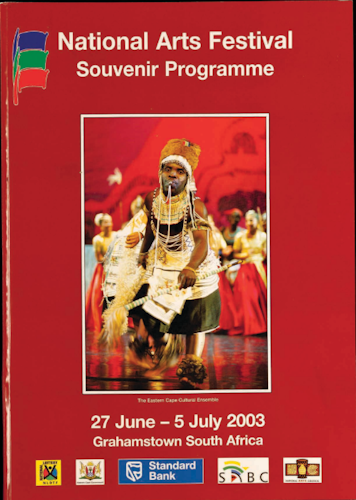
Building on the success of the previous year’s model, 2003 saw two new sponsors added to the partnership that already included the NAC, EC DSRAC and Standard Bank. This year, the National Lotteries Distribution Trust and the SABC joined the partnership, reflecting the degree to which the Festival had truly become a national event. In order to succeed, the Festival relies on sponsors who truly understand the ethos and ends of our organization, which were beautifully reflected in SABC CEO Peter Matlare’s programme address: “The SABC, as the public broadcaster, considers that arts and culture, in their broadest sense, are…Read More
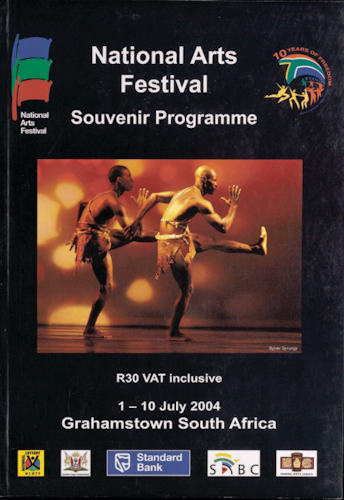
2004 was a year of milestones – South Africa celebrated 10 years of democracy, the National Arts Festival celebrated its 30th birthday, and Rhodes University celebrated its 100th year. In art, as in life, the celebration was also touched with sadness, as we bid farewell to a beloved member of the Festival family. Mr Ramolao Makhene, who served on the Committee of the National Arts Festival for 15 years, passed on the 13 July 2003, very shortly after the end of that year’s festival. Having been an integral part of the programme planning and curation for an extended period, he…Read More
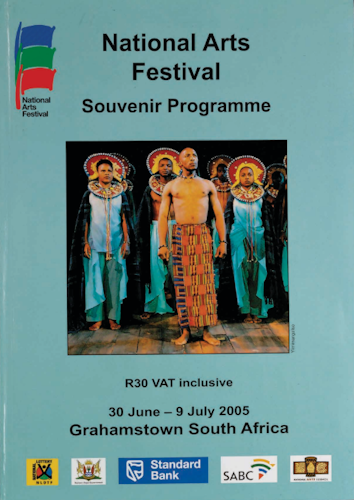
Mannie Manim, who had by now been Festival Chairman for several years, used his programme note in 2005 to encourage festival goers to visit the Fringe events. It was certainly true that the Fringe programme had continued to grow in leaps and bounds over the years. As Fringe work is completely self-funded, or at least reliant on Fringe artists finding their own sponsors and grants, a robust, healthy and varied Fringe programme is possibly one of the greatest markers of the health of a festival like ours, and an indication of the state of the arts in the county…Read More
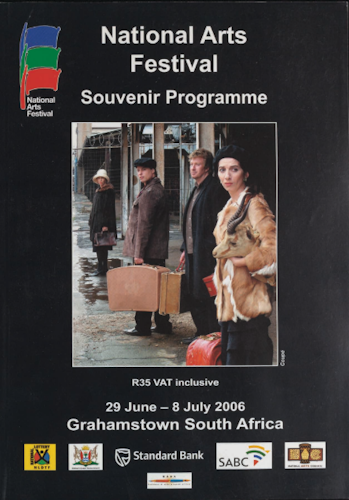
A familiar name appears in a surprising place in the 2006 programme! Former Artistic Advisor, Roy Sargaent appears in a new capacity – as director of Artscape’s The Boy Who Fell From the Roof. Another familiar name should be Churchill Madikida, the 2006 Young Artist for Visual Arts. His exhibition Like Father Like Son? was a bold exploration of a difficult subject, which remains hauntingly relevant in our societies today: “It is widely acknowledged that children need structure, security, stability and attachment to develop and flourish. Issues such as high divorce rates, new family structures, increased mobility, women’s liberation etc.…Read More