
Timeline Test styling
51 Years of The Festival
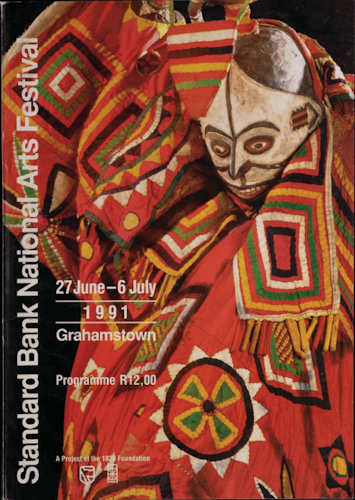
As the socio-political transformation of South Africa continued to unfold, the National Arts Festival found itself more able than ever to engage with cultural groups, political organizations and artistic movements to which our access had long been restricted. The Festival felt this not only as an encouraging opportunity for new growth, but also as a moral imperative. In his opening address, Professor Alan Crump explained that: “that the Festival is moving closer to reflecting the richness and diversity of South Africa’s cultural heritage. To criticise and adopt diverse view-points Is also an expected part of a national festival’s creative mosaic……Read More
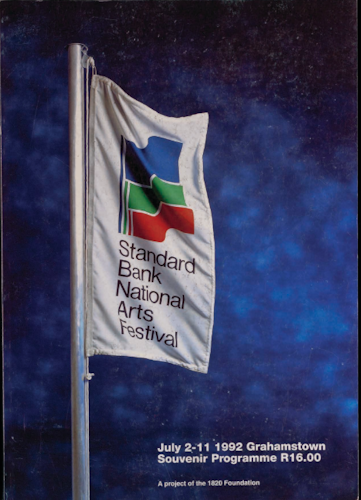
Festival goers arrived in 1992 to find that the Festival had a whole new look! For the first time, the National Arts Festival had its own branding. The logos of Standard Bank and the 1820 Foundation had been replaced by the Festival’s new emblem – three flags in red, green and blue. As Professor Alan Crump, Chairman of the Standard Bank National Arts Committee, explained “It was felt that the largest cultural event in the country deserved an autonomous image and a new identity.” This new look extended from the programme to the town itself, as new and improved signage…Read More
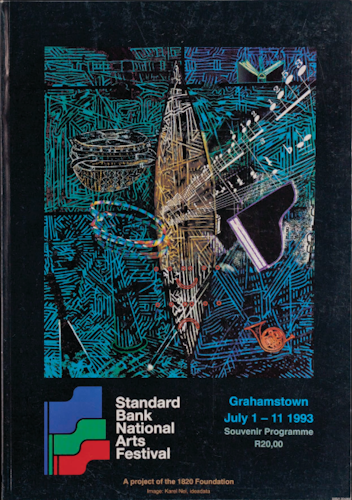
Two exciting new programmes were added to the Festival repertoire this year. The Smirnoff Jazz Festival – a festival within the Festival – had been a popular feature of the Fringe from 1989 to 1991 and had, by all accounts, been sorely missed in 1992. In 1993, it was not only welcomed back with great enthusiasm, but became a featured part of the curated programme. Here, it joined another art form being raised to greater prominence: Craftart. ‘Craftart’ is a term that was coined quite specifically for the South African context. In a fantastic essay in the souvenir programme, Dr…Read More
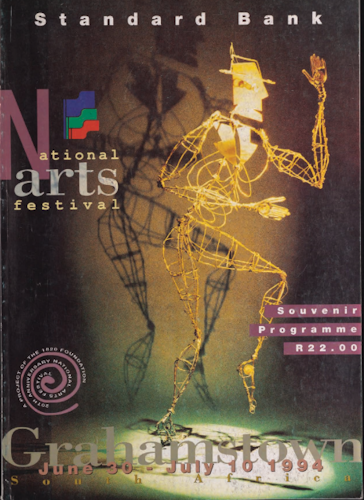
1994 was a year of incredible celebration, not just for the Festival, but for the country as a whole. Earlier that year, South Africa had held the first general election in which all races and ethnicities were able to participate equally. Though the Apartheid regime had been coming to an end for several years, these elections signified both a definitive ending, and a hopeful new beginning. This sense of celebration, reflection, and reconciliation naturally carried over into both the National Arts Festival’s official programme and the Fringe. As the Festival Committee’s Chairman expressed: “Over the past few months this country…Read More
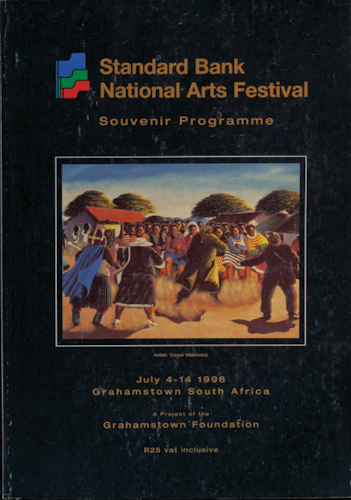
In August of 1994, the 1820 Settler’s Monument had been devastated by a fire which left much of the building seriously damaged. Extensive renovations were undertaken, including a redesign of the Guy Butler Theatre, and in May of 1996 the building was re-dedicated by then-President Nelson Mandela. Parts of the old fire damaged walls were left in place, and can still be spotted by sharp-eyed Festival goers today! But the President’s visit was more than a moment of great pride for the Festival team. It represented the growing sense that the National Arts Festival had reached a point of national…Read More
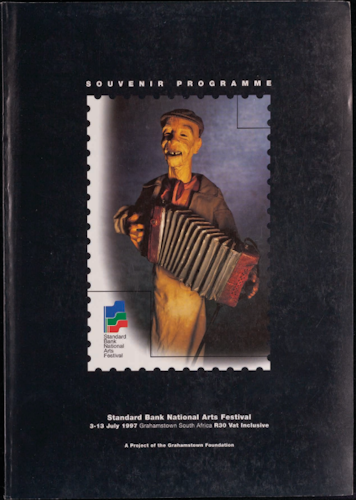
In a particularly candid and comprehensive programme note, Professor Alan Crump addressed some of the concerns that had been raised by members of the public and media over the past few years. Reading it today, it is striking to see how many of the challenges faced by the Festival in 1997 still strike a chord today. He describes a delicate balancing act that the Festival has had to consider every year since its inception: “During a time when so many involved in cultural pursuits in this country are battling to survive, the Standard Bank National Arts Festival Committee is proud…Read More
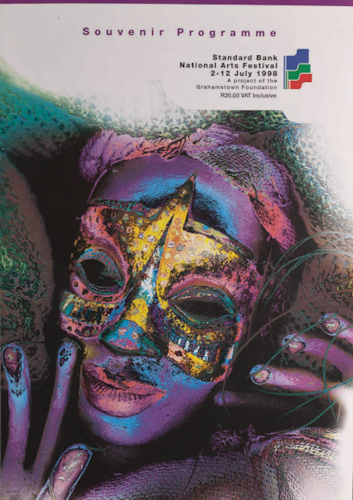
Despite being well into its third decade, the 1998 Festival boasted a number of exciting firsts! On the Curated Drama programme there were no fewer than eight plays written by South Africans. Of the total of 11 productions, seven were premieres. Brazilian actress and playwright Denise Stoklos made her first appearance in our country, as did Pulitzer Prize winning dramatist August Wilson. The State Theatre Ballet, now in its 35th year, came to Makhanda for the very first time, and Brett Bailey brought Ipi Zombi. Elsewhere in the programme were more familiar faces:, Reza de Wet and Marthinus Basson staged…Read More