J.M. Coetzee wins Nobel Prize in Literature Published on November 13, 2025 J.M. Coetzee received the award, completing a hat-trick of South African Nobel literature prizes, further affirming the role of the nation’s writers in addressing complex social and post-liberation issues.
Nadine Gordimer wins Nobel Prize in Literature Published on November 13, 2025 Novelist Nadine Gordimer won the Nobel, using her platform to speak out against apartheid and highlighting the role of literature in the liberation struggle.
Wole Soyinka wins Nobel Prize in Literature Published on November 13, 2025 Nigerian writer Wole Soyinka became the first African Nobel laureate in Literature. His recognition highlighted the global importance of African literature.
Assasination of Chris Hani Published on November 13, 2025 The assassination of popular ANC and SACP leader Chris Hani nearly derailed the peace process, but Nelson Mandela’s subsequent plea for calm helped secure the transition.
Death of Steve Biko Published on November 13, 2025 Anti-apartheid activist and leader of the Black Consciousness Movement, Steve Biko, died in police detention. His death led to increased international pressure and sanctions against the apartheid regime.
The Soweto Uprising Published on November 13, 2025 Students protested the forced use of Afrikaans as a medium of instruction. The police violently suppressed the protest, leading to hundreds of deaths and galvanizing the international anti-apartheid movement.
Fall of the Berlin Wall Published on November 13, 2025 A symbolic and actual end to the “Iron Curtain” and a major step toward the reunification of Germany and the end of the Cold War.
Unbanning of Political Parties & Release of Mandela Published on November 13, 2025 The ANC, PAC, SACP, and other political organizations, and Nelson Mandela was released from prison on February 11, marking the start of formal negotiations to end apartheid.
Launch of the iPhone Published on November 13, 2025 Ushered in the modern smartphone era, profoundly changing global communication, commerce, and media consumption.
1980 Published on October 23, 2025 1980 was perhaps the first time that the then-named Five Roses Festival of the Arts had a programme that so closely resembled the structure of the National Arts Festival today. The curated programme was filled with Classical Music, Jazz, Opera, Fine Arts Theatre, and Film, and with artists who have continued to make regular appearances
1981 Published on October 23, 2025 The Festival headed into the 80’s with an increasingly strengthened sense of identity and purpose. For the first time called the ‘National’ Festival of the Arts, the importance and scale of the work done annually in Makhanda was beginning to solidify in the artistic community. Mr DM Hopkins, then Chairman of the Festivals Committee, expressed
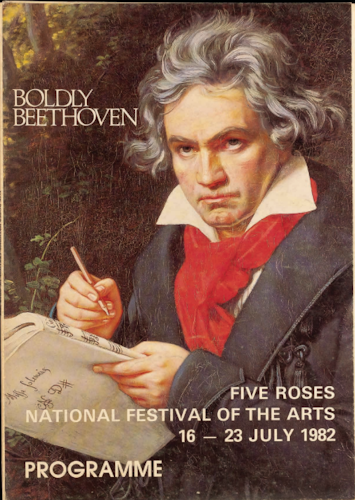
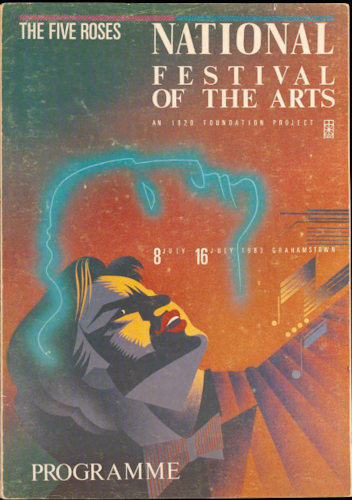
1982 Published on October 23, 2025 From the time of its inception, the curated programme has always been organised around a central theme, idea or artistic thread. With the guidance and vision of the Artistic Director, these central ideas guide the selection and curation of work, culminating in a programme that feels fresh and distinct each year, and reflects the artistic
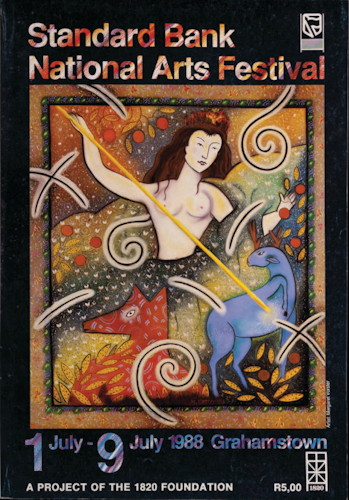
1988 Published on October 23, 2025 With South Africa still being governed under a State of Emergency, the continued celebration of the National Arts Festival was a complex matter. Without wishing any festivities to appear insensitive to, or detached from, the immense hardships being experienced around the country, the Festival was mindful of the opportunities that it was able to provide
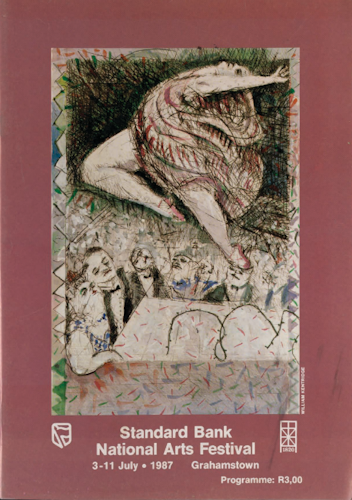
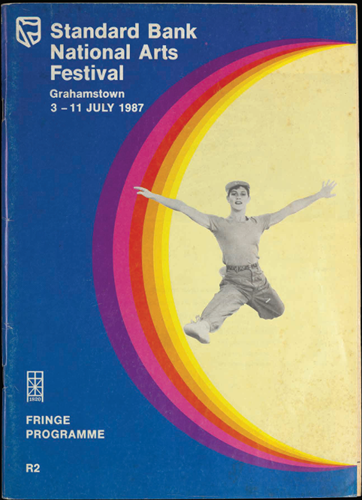
1987 Published on October 23, 2025 As civil unrest continued into 1987, the Festival continued to use its platform to promote diversity and inclusion for all South Africans. The value of the work done in the artistic sector at this time was profound, and was encapsulated beautifully by Jan Breitenbach’s introduction to the 1987 Festival: “In these times of social, political
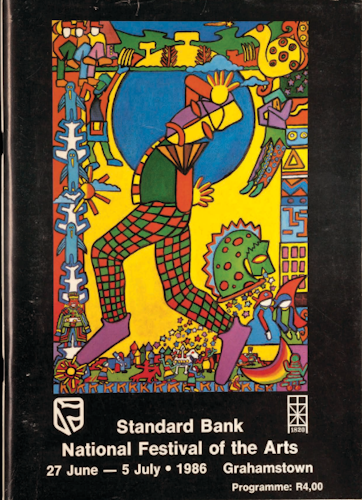
1986 Published on October 23, 2025 1986 was a year marked by social and political turmoil in South Africa. Amidst the collapse of the Rand, protest action against racial segregation laws, and increasing levels of violence between the state and civilians, the Festival programme was arranged around the theme ‘Encounters’. Although the Festival has always striven to remain apolitical itself, we
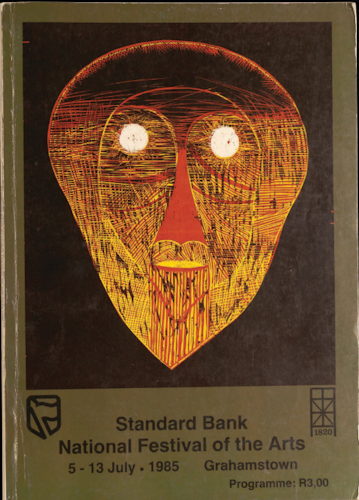
1985 Published on October 23, 2025 The Festival’s commitment to honouring South African artists and to providing a platform for South African voices continued into this, its second decade. The programme for the 1985 Standard Bank National Festival of the Arts, with a cover designed by Cecil Skotnes, is packed with names and titles familiar to seasoned audiences and newcomers alike.
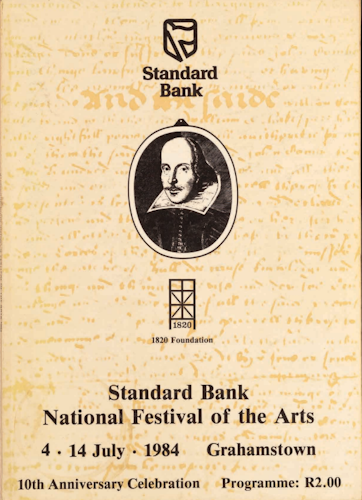
1984 Published on October 23, 2025 Affectionately called the Festival of Celebration within the arts community, the 1984 Festival marked the 10th anniversary of the National Arts Festival. It was also the beginning of a long and mutually beneficial partnership with Standard Bank, who took over as the primary sponsors. Now known as The Standard Bank National Festival of the Arts,
1983 Published on October 23, 2025 1983 was a milestone for the National Arts Festival and its ability to showcase and promote indigenous artists. Whilst the Festival has always welcomed art and artists from all backgrounds, ethnicities and cultures, 1983 marked the first year that the Festival was able to place these voices firmly in the centre of the programme. Dudley
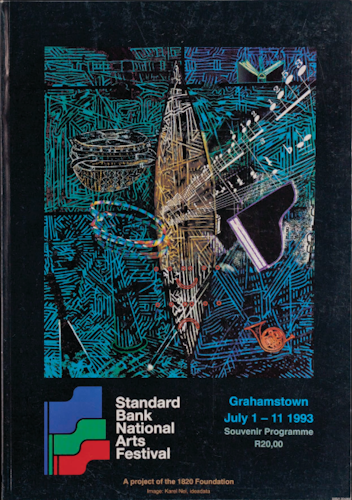
1993 Published on October 23, 2025 Two exciting new programmes were added to the Festival repertoire this year. The Smirnoff Jazz Festival – a festival within the Festival – had been a popular feature of the Fringe from 1989 to 1991 and had, by all accounts, been sorely missed in 1992. In 1993, it was not only welcomed back with great
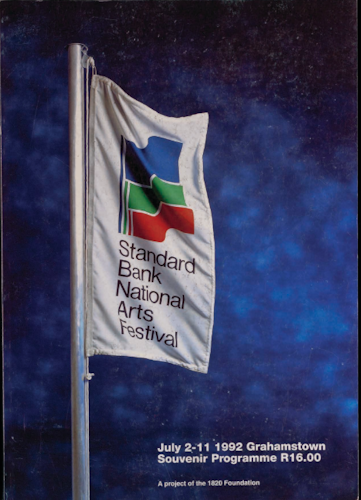
1992 Published on October 23, 2025 Festival goers arrived in 1992 to find that the Festival had a whole new look! For the first time, the National Arts Festival had its own branding. The logos of Standard Bank and the 1820 Foundation had been replaced by the Festival’s new emblem – three flags in red, green and blue. As Professor Alan
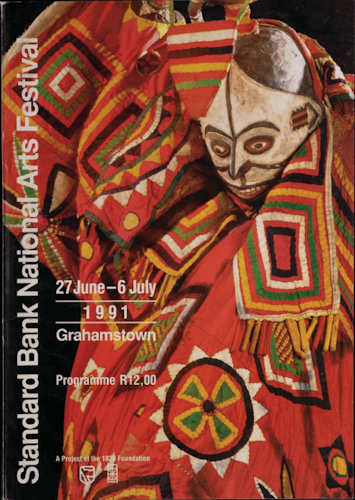
1991 Published on October 23, 2025 As the socio-political transformation of South Africa continued to unfold, the National Arts Festival found itself more able than ever to engage with cultural groups, political organizations and artistic movements to which our access had long been restricted. The Festival felt this not only as an encouraging opportunity for new growth, but also as a
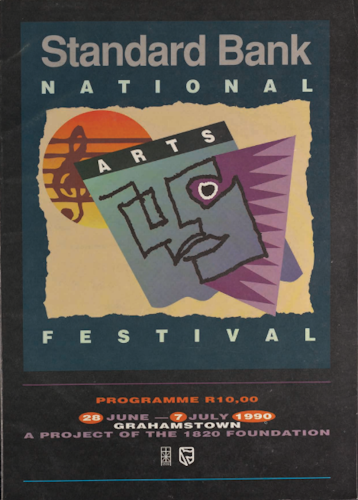
1990 Published on October 23, 2025 At the start of the new decade, the National Arts Festival naturally reflected on its growth over the preceding fifteen years. In his Festival Message, Professor Alan Crump – Chairman of the Festival Committee – reminded festival goers that the Fringe had begun with just five events in 1978! There were 21 events in the
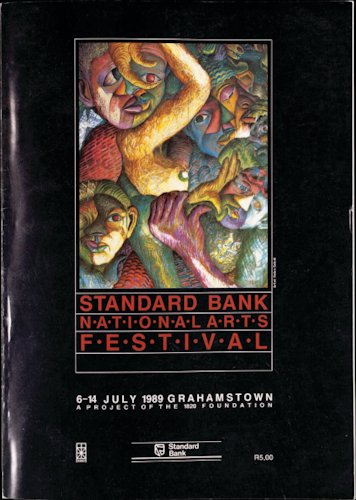
1989 Published on October 23, 2025 If art is a mirror for society, then the 1989 National Arts Festival reflected a collective certainty that change in the country’s political regime was imminent. Although the Festival is apolitical, this year’s programme contains hints of the democratic future that lay just around the corner. For the first time, contributors to the programme referenced
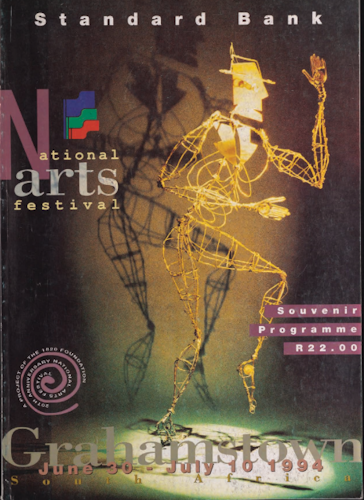
1994 Published on October 23, 2025 1994 was a year of incredible celebration, not just for the Festival, but for the country as a whole. Earlier that year, South Africa had held the first general election in which all races and ethnicities were able to participate equally. Though the Apartheid regime had been coming to an end for several years, these
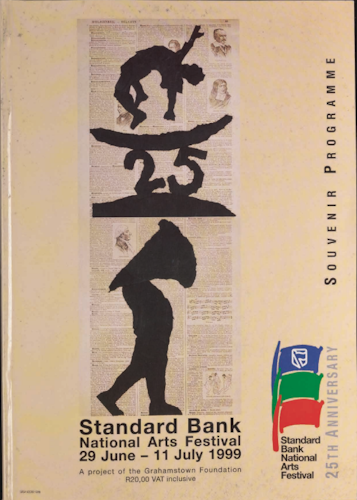
1999 Published on October 23, 2025 To mark the occasion of the 25th anniversary of the National Arts Festival, the programme opened with an address from a very special patron: “As patron of the 1999 twenty-fifth anniversary Standard Bank National Arts Festival, it is a pleasure to welcome festival-goers to Grahamstown. Over the years, the arts have played a critical part
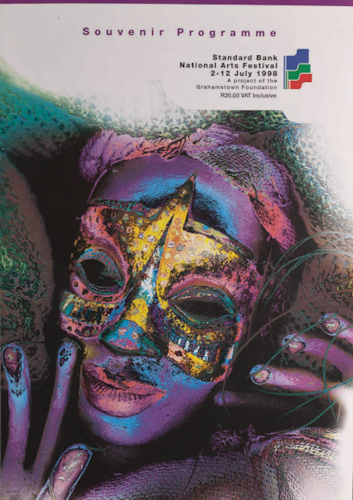
1998 Published on October 23, 2025 Despite being well into its third decade, the 1998 Festival boasted a number of exciting firsts! On the Curated Drama programme there were no fewer than eight plays written by South Africans. Of the total of 11 productions, seven were premieres. Brazilian actress and playwright Denise Stoklos made her first appearance in our country, as
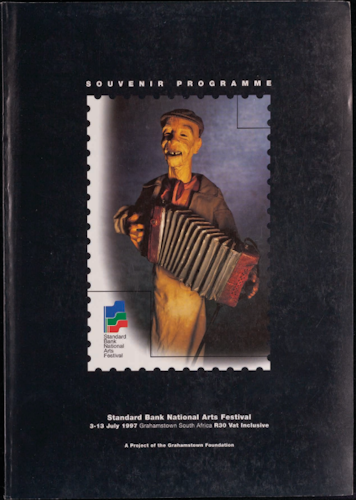
1997 Published on October 23, 2025 In a particularly candid and comprehensive programme note, Professor Alan Crump addressed some of the concerns that had been raised by members of the public and media over the past few years. Reading it today, it is striking to see how many of the challenges faced by the Festival in 1997 still strike a chord
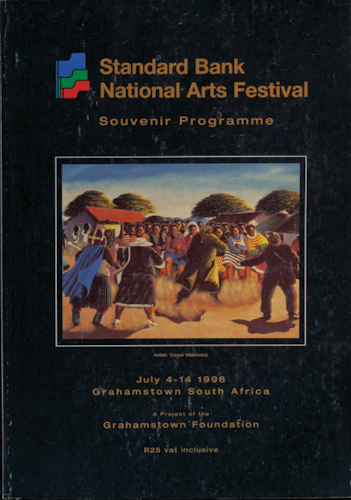
1996 Published on October 23, 2025 In August of 1994, the 1820 Settler’s Monument had been devastated by a fire which left much of the building seriously damaged. Extensive renovations were undertaken, including a redesign of the Guy Butler Theatre, and in May of 1996 the building was re-dedicated by then-President Nelson Mandela. Parts of the old fire damaged walls were
1995 Published on October 23, 2025 As is often the case, there were a number of programme elements in 1995 that beautifully showcased the arts’ unique ability to encapsulate moments of history and culture. One such installation was the work of that year’s Standard Bank Young Artist for Visual Art – Jane Alexander. Working primarily in plaster, Alexander was interested in
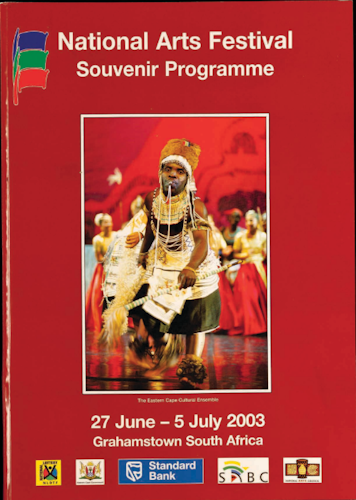
2003 Published on October 23, 2025 Building on the success of the previous year’s model, 2003 saw two new sponsors added to the partnership that already included the NAC, EC DSRAC and Standard Bank. This year, the National Lotteries Distribution Trust and the SABC joined the partnership, reflecting the degree to which the Festival had truly become a national event. In
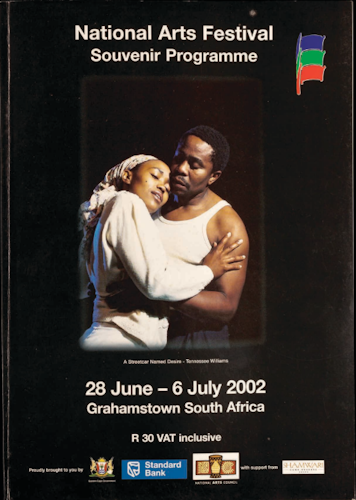
2002 Published on October 23, 2025 As had been hoped, new sponsors were able to step into play as Standard Bank withdrew. In 2002, and for the first time in its history, the National Arts Festival received a significant amount of its sponsorship from provincial government and the National Arts Council. Not only was this significant as the beginning of a
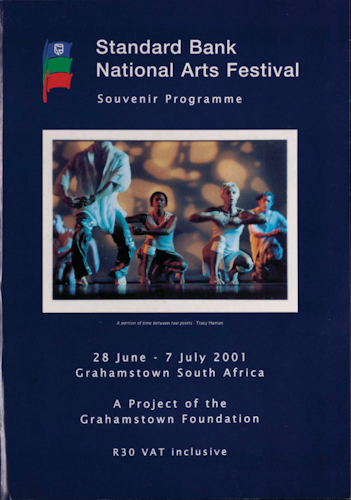
2001 Published on October 23, 2025 2001 was the 18th, and final, year of the Standard Bank National Arts Festival. The bank continued its sponsorship of the festival in several more niche areas, but was no longer the named sponsor of the Festival as a whole. Standard Banks CEO wrote a farewell of sorts, commemorating the banks long partnership with the
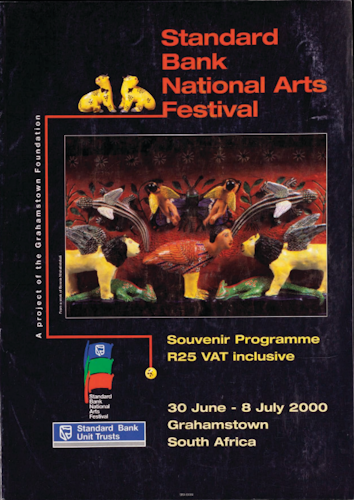
2000 Published on October 23, 2025 The first festival of the new millennium contained an incredible 227 live performances! The festival committee in that year was a powerhouse of well-known professionals, including: Mannie Manim, Guy Butler, Richard Cock, Marthinus Basson, Khayalethu Lennox Faba, Ingrid Fiske, Vicki Karras, Melanie Hillebrand, Sibongile Khumalo, Mokale Koapeng, Ramolao Makhene, Tale Motsepe, Sydney Selepe, Lara Foot,
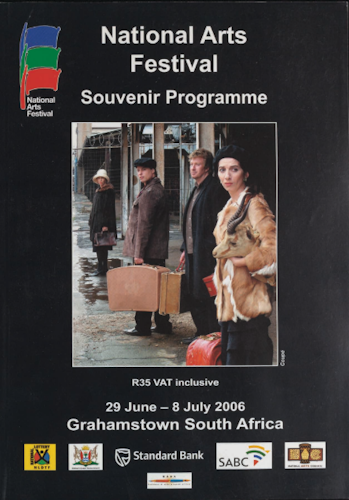
2006 Published on October 23, 2025 A familiar name appears in a surprising place in the 2006 programme! Former Artistic Advisor, Roy Sargaent appears in a new capacity – as director of Artscape’s The Boy Who Fell From the Roof. Another familiar name should be Churchill Madikida, the 2006 Young Artist for Visual Arts. His exhibition Like Father Like Son? was
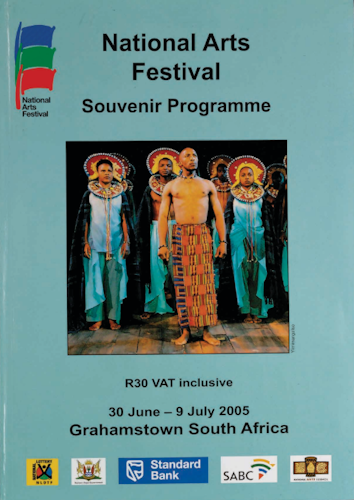
2005 Published on October 23, 2025 Mannie Manim, who had by now been Festival Chairman for several years, used his programme note in 2005 to encourage festival goers to visit the Fringe events. It was certainly true that the Fringe programme had continued to grow in leaps and bounds over the years. As Fringe work is completely self-funded, or at
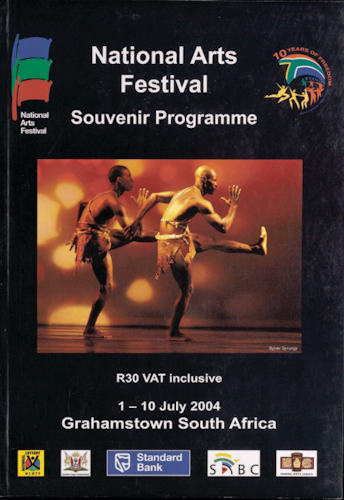
2004 Published on October 23, 2025 2004 was a year of milestones – South Africa celebrated 10 years of democracy, the National Arts Festival celebrated its 30th birthday, and Rhodes University celebrated its 100th year. In art, as in life, the celebration was also touched with sadness, as we bid farewell to a beloved member of the Festival family. Mr Ramolao
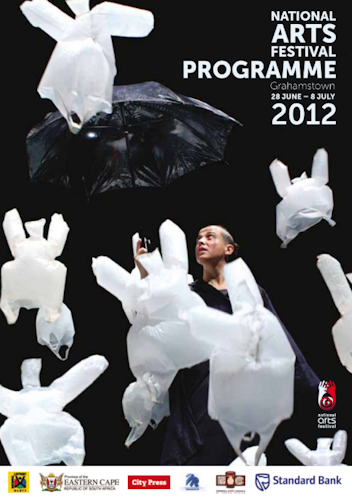
2012 Published on October 23, 2025 Seasoned festival attendees might have noticed that, in 2012, the programme was slightly edgier and more daring than it had been in the past. Explaining this choice, the new Chairperson of the Artistic Committee Jay Pather, explored the role of the Festival, and the arts, in the contemporary political landscape: “In our deliberations at the
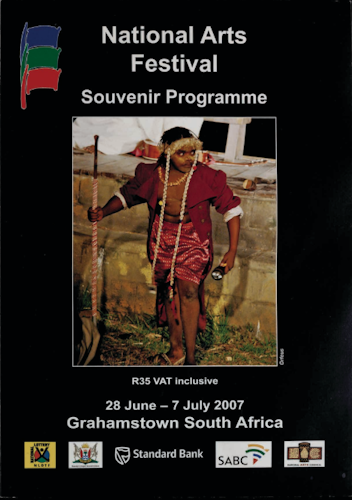
2007 Published on October 23, 2025 For many years, the Jazz programme had been a favourite amongst festival audiences. Despite withdrawing as the primary sponsor, Standard Bank continued to sponsor more niche elements of the programme, including the Standard Bank Jazz Festival, and the Youth Jazz Festival. The Jazz programme, always vibrant and varied, includes performances from seasoned professional to emerging
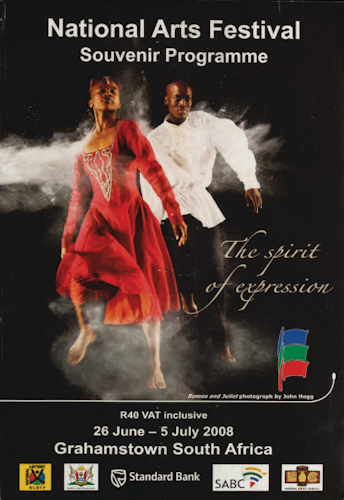
2008 Published on October 23, 2025 Two significant changes were afoot in the tight knit Festival team in 2008. We were in the processing of bidding farewell to Lynette Marais, our Festival Director, who was entering a well-deserved and hard-earned retirement. Lynette had steered the Festival ship remarkably for more than two decades. As Ayanda Mjekula, Chairman of the National Arts
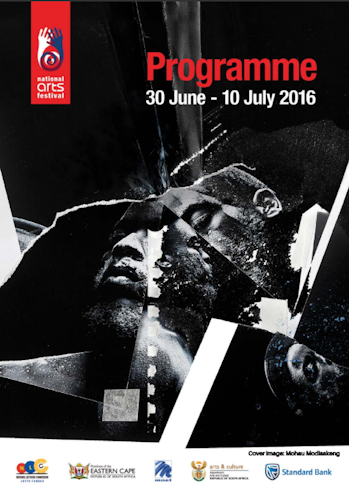
2016 Published on October 23, 2025 In his final year as Artistic Director, Ishmail Mohammed had organized the 2016 programme into Curatorial Strands – themes running through the diverse programme elements, allowing it to be understood both in parts and as a whole. These six Curatorial Strands were: Celebrating Women; Conflict & Resolution; the Politics of Identity; Legends & Legacies; Re-imagining
2015 Published on October 23, 2025 VIBRANT FORCE FOR ADVOCACY AND CHALLENGING THE CONSCIENCE – A message from the Artistic Committee “The 2015 programme of the National Arts Festival has been shaped by diverse threads: the heated national debate surrounding the legacies of South African history; significant anniversaries of a number of arts icons; the global public engagement concerning the limits
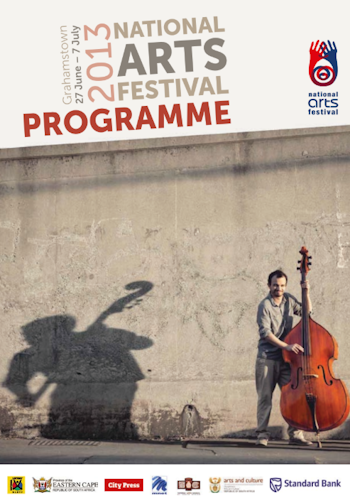
2013 Published on October 23, 2025 Where Jay Pather’s welcome to the 2012 Festival highlighted the innovation of that year, his greeting in 2013 was more what he himself called “a call to realism.” The 2013 programme was burdened by many of the same cares that affect the National Arts Festival, and arts organisations nationwide, today. A lack of funding, coupled
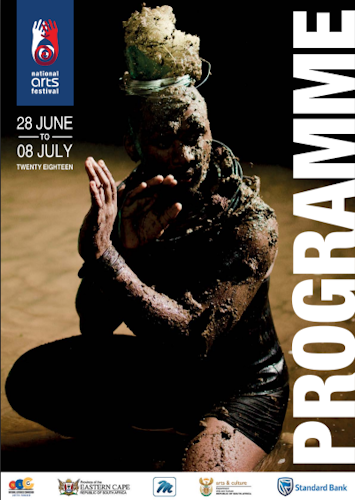
2018 Published on October 23, 2025 With an ale unveiled the year before, you might be forgiven for thinking the Festival could have nothing more exciting up its sleeve for 2018. But you’d be wrong! This year, the Festival hit the digital ground running with the launch of the brand new app! Not only could audience members now book tickets with
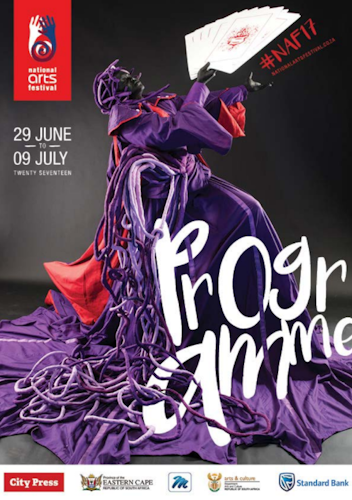
2017 Published on October 23, 2025 Introducing… the Festival of Ale! For the first time, the National Arts Festival had its own signature drinks. In partnership with the Featherstone Brewery, we crafted the Festival Ale so that thirsty patrons, tired technicians and excited artists could look forward to something cold, frosty, and truly special at the end of each day! The
1979 Published on October 7, 2025 This time called the Five Roses Festival of the Arts after a new sponsorship, the 1979 Festival was produced in collaboration with the then-named Department of National Education. The effect of this collaboration is self-evident in the programme for this year which, in addition to what had become the regular offering of gala concerts, orchestras,
1978 Published on October 1, 2025 With a naming sponsorship from Sharp Electronics, the 1978 Sharp Festival of the Arts was able to recapture some of its earlier ambition. The Fine Arts took a front seat, as one of the Monument Building’s primary functions – as an exhibition space – was able to be fully realised for the first time. Curated
1977 Published on October 1, 2025 After three years of successful festivals, there was some debate as to whether another would be possible in 1977. Economic recession and petrol rationing, to say nothing of a tumultuous political situation, had led to financially challenging times across the country. The programme’s opening note, by Professor Guy Butler, explains the motivation to forge ahead:
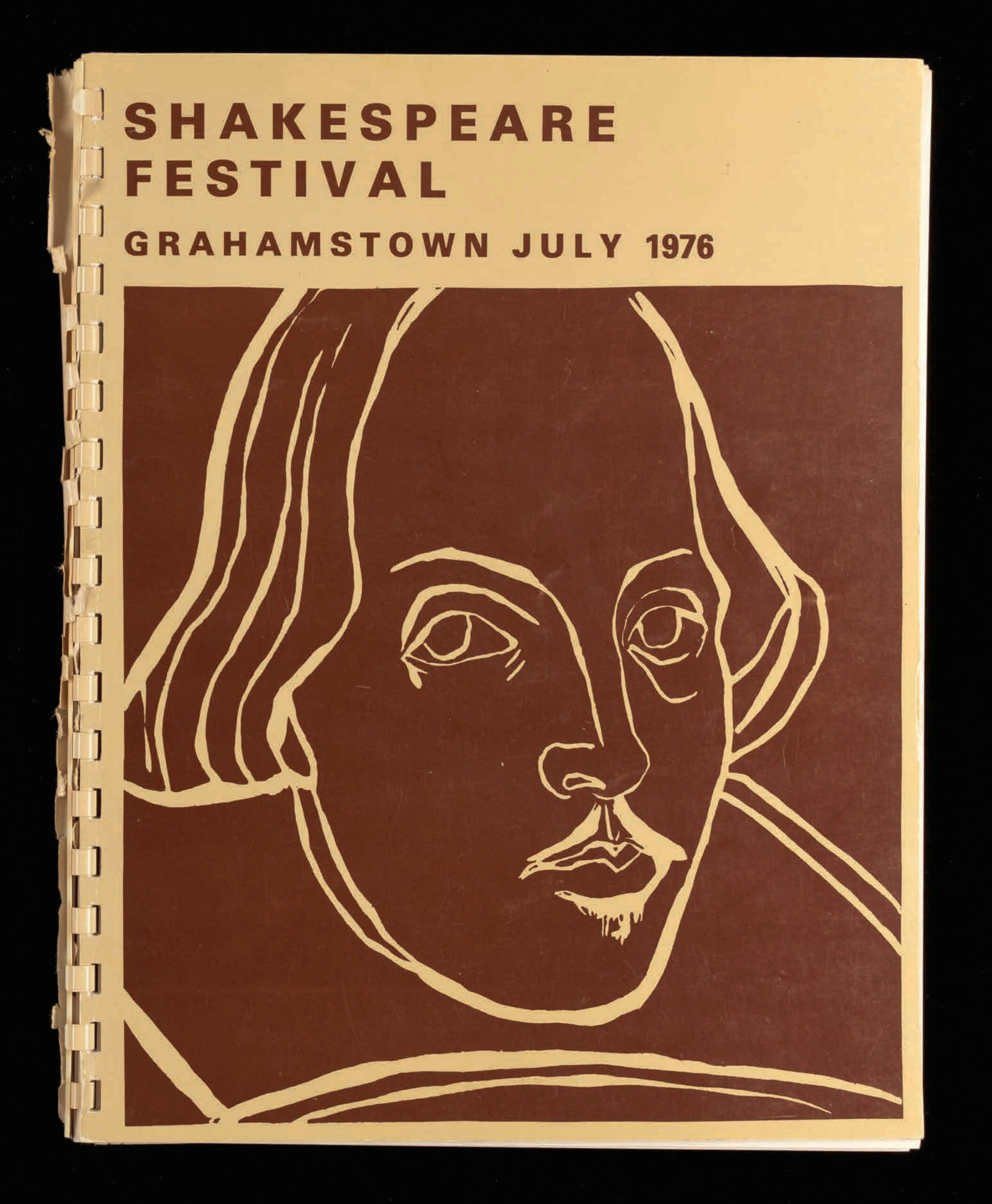
1976 Published on October 1, 2025 1976’s festival was officially called the Shakespeare Festival. As the name suggests, the programme was focused on fostering an appreciation and enjoyment of Shakespearean drama, and included performances and films of an incredible variety of his works, from Richard III, Macbeth and Othello to A Midsummer Night’s Dream, Romeo & Juliet and Love’s Labours Lost.
1974 Published on January 1, 1974 The inaugural Festival celebrated the official opening and dedication of the 1820 Settlers Monument Building. Operating as a living monument to the cultural heritage of all South Africans, the building contains numerous venues, from a spectacular 1000 seater auditorium to small meeting rooms, including a fully functional kitchen, banqueting area, bar and coffee shop. The