The Festival in a Changing World

1974
1974

The inaugural Festival celebrated the official opening and dedication of the 1820 Settlers Monument Building. Operating as a living monument to the cultural heritage of all South Africans, the building contains numerous venues, from a spectacular 1000 seater auditorium to small meeting rooms, including a fully functional kitchen, banqueting area, bar and coffee shop. The Monument is the centre of operations for the National Arts Festival, the Grahamstown Foundation, SciFest Africa, the National Schools Festival, the English Olympiad, and many more! During the National Arts Festival, it is one of the main hubs of activity. In 1974, the Festival ran…Read More

1976
The Soweto Uprising

The Soweto Uprising begins as thousands of black school students protest against the imposition of Afrikaans as a medium of instruction. The peaceful march is met with violent police repression, resulting in widespread unrest and international condemnation of the apartheid regime. The uprising becomes a defining moment in South Africa’s liberation struggle, galvanising internal resistance and drawing global attention to the injustices of apartheid, ultimately contributing to increased political pressure for systemic change.

1976
1976

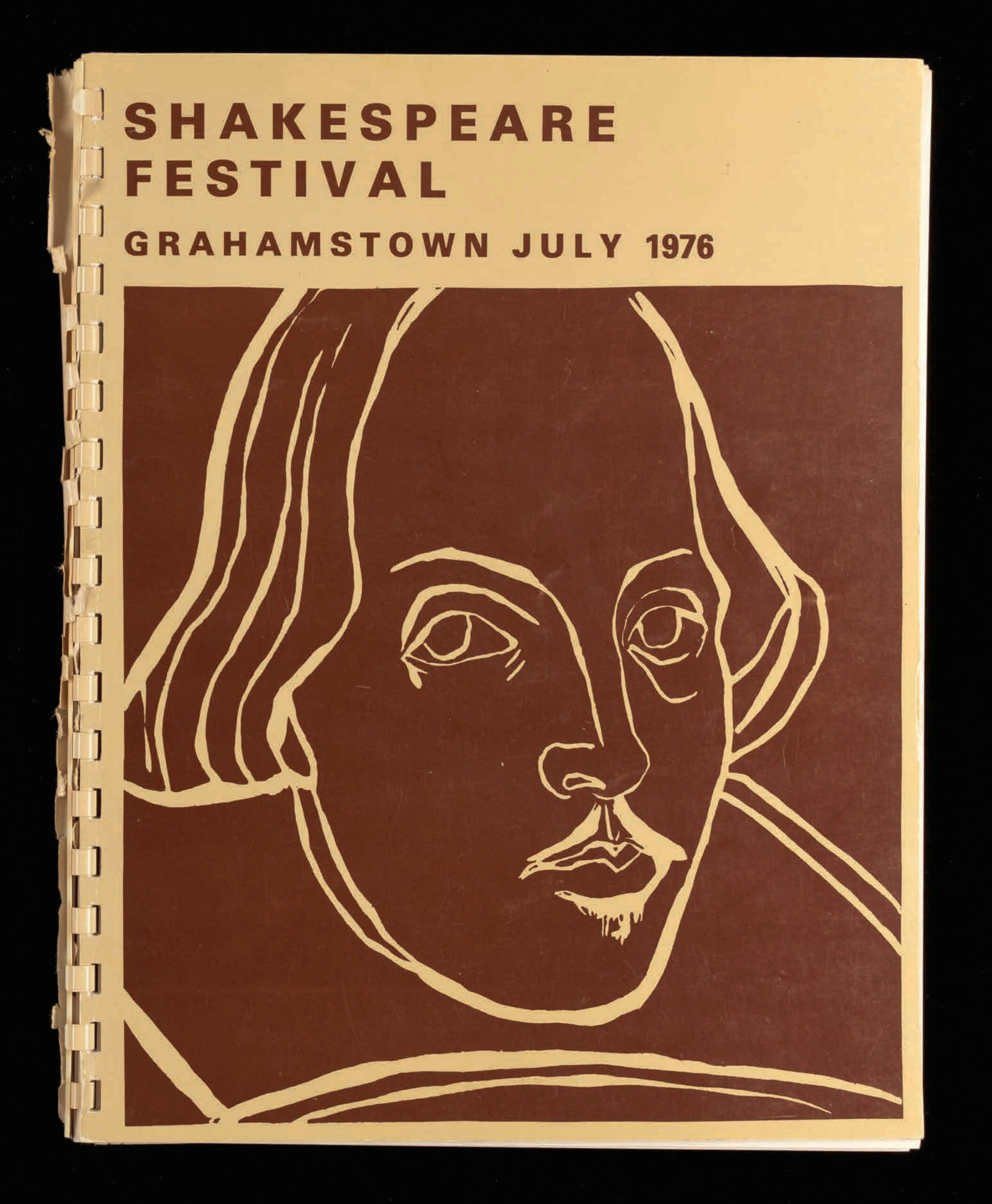
1976’s festival was officially called the Shakespeare Festival. As the name suggests, the programme was focused on fostering an appreciation and enjoyment of Shakespearean drama, and included performances and films of an incredible variety of his works, from Richard III, Macbeth and Othello to A Midsummer Night’s Dream, Romeo & Juliet and Love’s Labours Lost.  But it wasn’t just the classics on offer. Dawn Lindberg returned to our stages with The Shrew – a reimagining of The Taming of the Shrew, written by Charles Marowitz. Two plays authored by Pieter Dirk-Uys – already a formidable talent, though not yet a…Read More

1977
1977

After three years of successful festivals, there was some debate as to whether another would be possible in 1977. Economic recession and petrol rationing, to say nothing of a tumultuous political situation, had led to financially challenging times across the country. The programme’s opening note, by Professor Guy Butler, explains the motivation to forge ahead: “The current recession and the advent of petrol rationing caused the Festivals Committee and the Council of the Foundation to question whether the Festival should not be abandoned until the economy recovers, but they concluded that it would be short sighted to lose the momentum…Read More

Death of Steve Biko

Steve Biko, leader of the Black Consciousness Movement, dies in police custody after severe assault, sparking outrage both locally and internationally. His death exposes the brutality of the apartheid security apparatus and becomes a powerful symbol of resistance against oppression. The global response intensifies calls for sanctions and isolation of the apartheid state, while within South Africa, Biko’s legacy continues to inspire activism, pride, and a renewed commitment to psychological and political liberation.

1978
1978
1978

With a naming sponsorship from Sharp Electronics, the 1978 Sharp Festival of the Arts was able to recapture some of its earlier ambition. The Fine Arts took a front seat, as one of the Monument Building’s primary functions – as an exhibition space – was able to be fully realised for the first time. Curated by Linda Goodman of the Goodman Gallery, the Monument’s galleries were officially launched with an exhibition that featured the likes of Leonard Matsoso, Cecil Skotnes, Andrew Verster and Raymond van Niekerk. The Rehearsal Room – still a popular venue today –housed lectures delivered by Cecil…Read More

1979
1979

This time called the Five Roses Festival of the Arts after a new sponsorship, the 1979 Festival was produced in collaboration with the then-named Department of National Education. The effect of this collaboration is self-evident in the programme for this year which, in addition to what had become the regular offering of gala concerts, orchestras, and films, emphasized another strong Student Festival and a prominent series of Winter Schools.  Then, as now, student theatre was often daring, experimental, and prone to pushing the boundaries of traditional modes of theatre practice. The printed programme for this year contained a fascinating disclaimer:…Read More

1981
1981

The Festival headed into the 80’s with an increasingly strengthened sense of identity and purpose. For the first time called the ‘National’ Festival of the Arts, the importance and scale of the work done annually in Makhanda was beginning to solidify in the artistic community. Mr DM Hopkins, then Chairman of the Festivals Committee, expressed some of this vision in his foreword to this year’s programme: “To enrich the educational and cultural development of the peoples of South Africa” is the objective adopted this year by the 1820 Foundation as its aim for the eighties. Proud objectives need to be…Read More

1980

1980 was perhaps the first time that the then-named Five Roses Festival of the Arts had a programme that so closely resembled the structure of the National Arts Festival today. The curated programme was filled with Classical Music, Jazz, Opera, Fine Arts Theatre, and Film, and with artists who have continued to make regular appearances on our stages to the present day. Waiting for Godot, to name but one example, played at the Rhodes University Theatre, with a phenomenal cast that included the likes of John Kani, Winston Ntshona and Pieter-Dirk Uys. Jazzart, South Africa’s oldest dance company, made their…Read More

1982
1982
1982

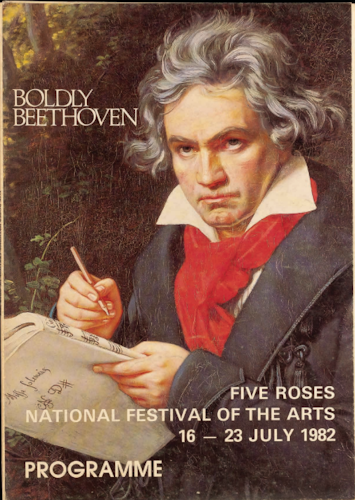
From the time of its inception, the curated programme has always been organised around a central theme, idea or artistic thread. With the guidance and vision of the Artistic Director, these central ideas guide the selection and curation of work, culminating in a programme that feels fresh and distinct each year, and reflects the artistic achievements of the past, contemporary creative innovations of the present, and visions for the future.  In 1982, the central idea of the Curated programme was The Beginnings and Growth of 19th Century Romanticism. In particular, the music of Beethoven was a focal point, with renditions…Read More

1983
1983
1983

1983 was a milestone for the National Arts Festival and its ability to showcase and promote indigenous artists. Whilst the Festival has always welcomed art and artists from all backgrounds, ethnicities and cultures, 1983 marked the first year that the Festival was able to place these voices firmly in the centre of the programme.  Dudley Hopkins, the Chairman of the Festival Committee, addressed the question of racial representation – then a radically contentious issue in South Africa – directly: “…the spotlight this year focuses in the main on South Africans – both living and dead. It has long been our…Read More

United Democratic Front Formed

The United Democratic Front is launched, bringing together hundreds of civic, religious, student, and labour organisations in a unified front against apartheid. The UDF plays a critical role in mobilising mass resistance through coordinated campaigns, protests, and community action. Its formation marks a shift toward broader, more organised internal opposition, strengthening the anti-apartheid movement and laying important groundwork for the negotiations that would eventually lead to democratic transition in the early 1990s.

1984
1984
1984

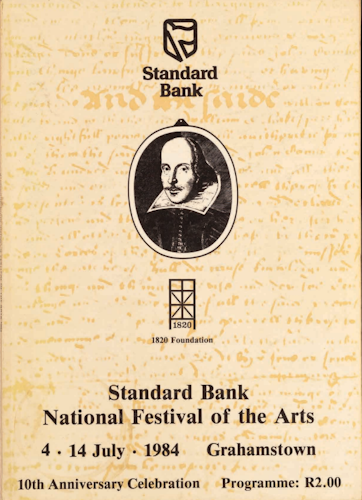
Affectionately called the Festival of Celebration within the arts community, the 1984 Festival marked the 10th anniversary of the National Arts Festival. It was also the beginning of a long and mutually beneficial partnership with Standard Bank, who took over as the primary sponsors. Now known as The Standard Bank National Festival of the Arts, the scale of the Festival programme increased dramatically, both to celebrate the achievement of a decade’s worth of dedication to the Arts, and as a result of how popular the festival had become with artists and audience members alike.  In tribute to its origins and…Read More

1985
1985
1985

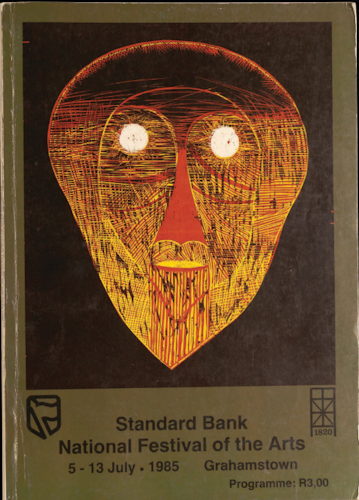
The Festival’s commitment to honouring South African artists and to providing a platform for South African voices continued into this, its second decade. The programme for the 1985 Standard Bank National Festival of the Arts, with a cover designed by Cecil Skotnes, is packed with names and titles familiar to seasoned audiences and newcomers alike. John Kani, fresh from a critically acclaimed season in London, returned to our stages with Danny Keogh and Dorothy Ann Gould in Harold Pinter’s One for the Road, while James Borthwick joined the cast of Paul Slabolepszy’s Under the Oaks and Over the Hill. Sidwill…Read More

State Of Emergency

A nationwide State of Emergency is declared by the apartheid government, granting sweeping powers to security forces amid escalating resistance and unrest. The measure allows for mass detentions without trial, censorship of media, and the suppression of political activity. While intended to restore control, it intensifies both internal opposition and international condemnation. The State of Emergency becomes emblematic of the regime’s crisis, highlighting the unsustainability of apartheid and accelerating pressure for meaningful political reform.

1986
1986
1986

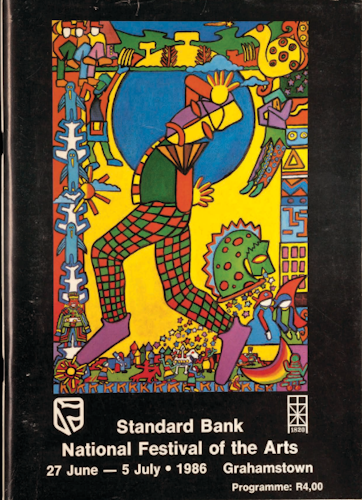
1986 was a year marked by social and political turmoil in South Africa. Amidst the collapse of the Rand, protest action against racial segregation laws, and increasing levels of violence between the state and civilians, the Festival programme was arranged around the theme ‘Encounters’. Although the Festival has always striven to remain apolitical itself, we have always stood for justice, equality, human rights, and open access, and the ‘Encounters’ programme attempted to create a space that welcomed and celebrated all voices. The introductory notes from several key players in the organisation demonstrate the challenges faced, and opportunities seized, by the…Read More

1987
1987
1987

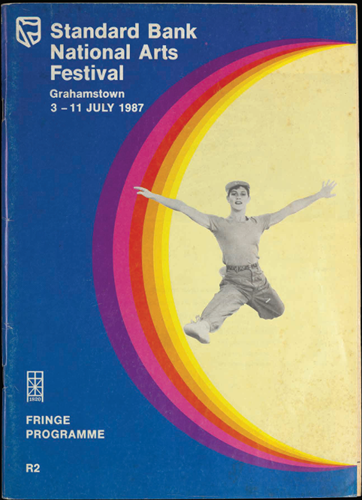
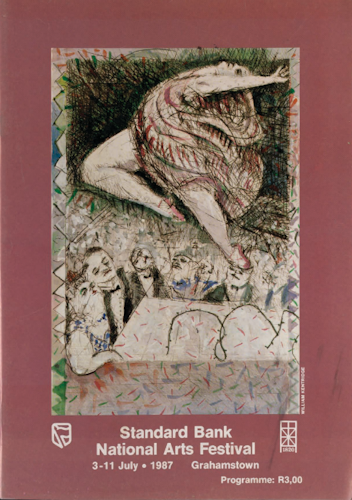
As civil unrest continued into 1987, the Festival continued to use its platform to promote diversity and inclusion for all South Africans. The value of the work done in the artistic sector at this time was profound, and was encapsulated beautifully by Jan Breitenbach’s introduction to the 1987 Festival: “In these times of social, political and economic uncertainty in South Africa the 1820 Foundation feels privileged to present the exciting Standard Bank National Arts Festival. The programme which has been compiled is well-balanced and stimulating – and perhaps more importantly, it transcends all the barriers which divide our people, because…Read More

1988
1988
1988

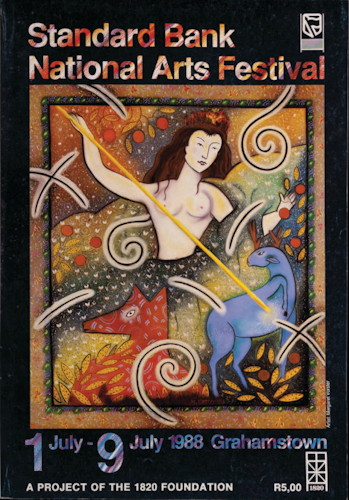
With South Africa still being governed under a State of Emergency, the continued celebration of the National Arts Festival was a complex matter. Without wishing any festivities to appear insensitive to, or detached from, the immense hardships being experienced around the country, the Festival was mindful of the opportunities that it was able to provide – not just artistically and financially, but by providing a platform for diversity and free expression.  In introducing the 1988 programme, the Chairman of the Festival Committee wrote:   “Grahamstown, because of its topography and the plight of the less privileged in the depressed Eastern Province,…Read More

1989
Fall of the Berlin Wall

The Fall of the Berlin Wall marks the symbolic end of the Cold War and signals a global shift away from rigid ideological divisions. Its collapse accelerates democratic transitions across Eastern Europe and reshapes international political dynamics. For South Africa, this moment is significant as it contributes to changing global attitudes toward authoritarian systems, indirectly influencing the apartheid government’s willingness to enter negotiations and reintegrate into an increasingly interconnected and

1989
1989

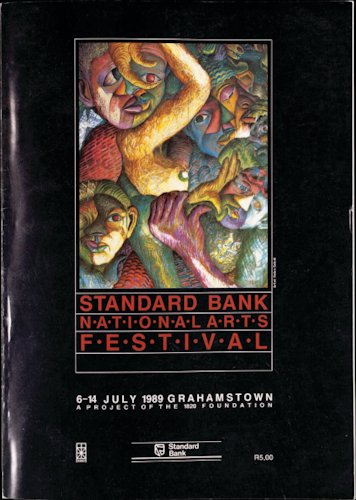
If art is a mirror for society, then the 1989 National Arts Festival reflected a collective certainty that change in the country’s political regime was imminent. Although the Festival is apolitical, this year’s programme contains hints of the democratic future that lay just around the corner. For the first time, contributors to the programme referenced the post-Apartheid era as a certainty, and the Festival celebrated its ability to provide a platform for free speech, open discourse, and continued meditations on the past and future. Standard Bank continued as a main sponsor and Dr Conrad Strauss, in his Festival Message, wrote:…Read More

1990
Unbanning of the ANC

The apartheid government announces the unbanning of the African National Congress (ANC) and other liberation movements, signalling the beginning of formal negotiations toward a democratic South Africa. This landmark decision follows years of internal resistance and international isolation. The move allows previously prohibited organisations to operate openly and engage in political processes, marking a decisive shift away from apartheid and laying the groundwork for the transition to majority rule and constitutional democracy.

Nelson Mandela is Released

Nelson Mandela is released from prison after 27 years, marking a decisive turning point in South Africa’s history. His release follows sustained internal resistance and mounting international pressure on the apartheid government. Mandela’s emergence signals the beginning of formal negotiations toward a democratic future and is widely celebrated as a moment of hope and reconciliation, both within South Africa and across the global community.

1990
1990

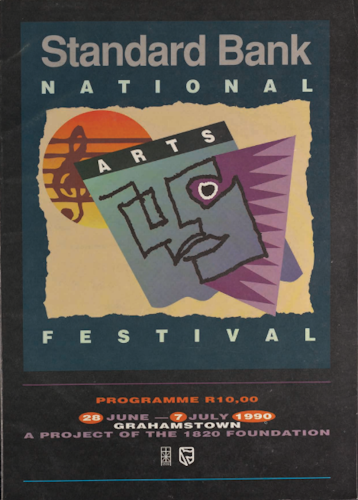
At the start of the new decade, the National Arts Festival naturally reflected on its growth over the preceding fifteen years. In his Festival Message, Professor Alan Crump – Chairman of the Festival Committee – reminded festival goers that the Fringe had begun with just five events in 1978! There were 21 events in the 1982 Fringe programme, and by 1989 had over 330 events. That year saw the sale of 60 000 Fringe tickets, an increase of 44%, while the Main Festival’s ticket sales grew by 32%. Such promising growth and scale placed the Festival unequivocally amongst international events of…Read More

1991
1991
1991

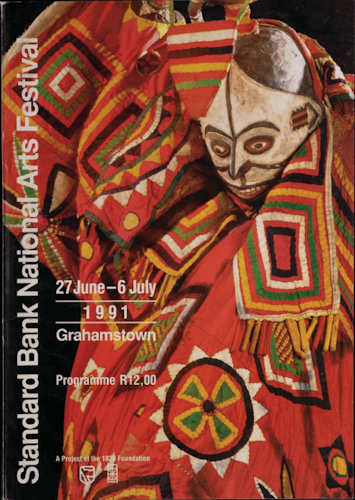
As the socio-political transformation of South Africa continued to unfold, the National Arts Festival found itself more able than ever to engage with cultural groups, political organizations and artistic movements to which our access had long been restricted. The Festival felt this not only as an encouraging opportunity for new growth, but also as a moral imperative. In his opening address, Professor Alan Crump explained that: “that the Festival is moving closer to reflecting the richness and diversity of South Africa’s cultural heritage. To criticise and adopt diverse view-points Is also an expected part of a national festival’s creative mosaic……Read More

Nadine Gordimer wins Nobel Prize in Literature

Nadine Gordimer is awarded the Nobel Prize in Literature, recognised for her powerful writing that confronts the moral and social complexities of apartheid. Her work brings international attention to the lived realities of South Africans under segregation, reinforcing the role of literature as both witness and resistance. This achievement highlights the global impact of South African cultural voices during a period of profound political transition.

1992
1992
1992

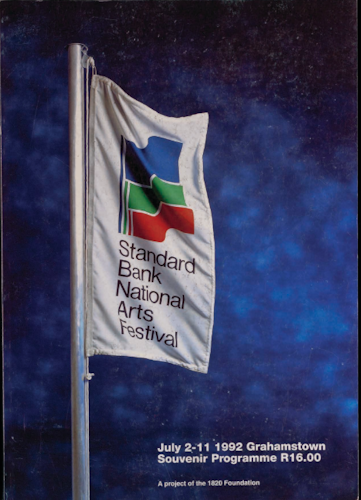
Festival goers arrived in 1992 to find that the Festival had a whole new look! For the first time, the National Arts Festival had its own branding. The logos of Standard Bank and the 1820 Foundation had been replaced by the Festival’s new emblem – three flags in red, green and blue. As Professor Alan Crump, Chairman of the Standard Bank National Arts Committee, explained “It was felt that the largest cultural event in the country deserved an autonomous image and a new identity.” This new look extended from the programme to the town itself, as new and improved signage…Read More

1993
Assasination of Chris Hani

The assassination of popular ANC and SACP leader Chris Hani nearly derailed the peace process, but Nelson Mandela’s subsequent plea for calm helped secure the transition.

1993
1993

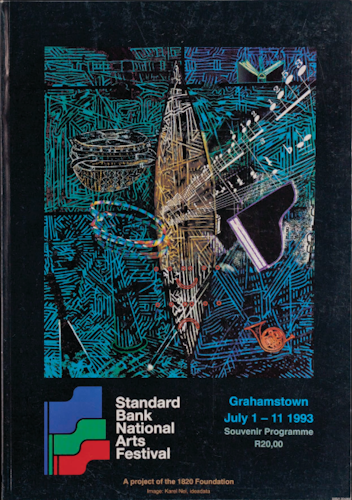
Two exciting new programmes were added to the Festival repertoire this year. The Smirnoff Jazz Festival – a festival within the Festival – had been a popular feature of the Fringe from 1989 to 1991 and had, by all accounts, been sorely missed in 1992. In 1993, it was not only welcomed back with great enthusiasm, but became a featured part of the curated programme. Here, it joined another art form being raised to greater prominence: Craftart. ‘Craftart’ is a term that was coined quite specifically for the South African context. In a fantastic essay in the souvenir programme, Dr…Read More

1994
Democratic Elections

South Africa holds its first democratic elections, allowing citizens of all races to vote for the first time. The election represents the formal end of apartheid and the beginning of a new constitutional democracy. With millions participating peacefully, it stands as a powerful symbol of national unity and transformation. This milestone not only reshapes the country’s political landscape but also repositions South Africa within the international community as a nation committed to equality, human rights, and inclusive governance.

1994
1994

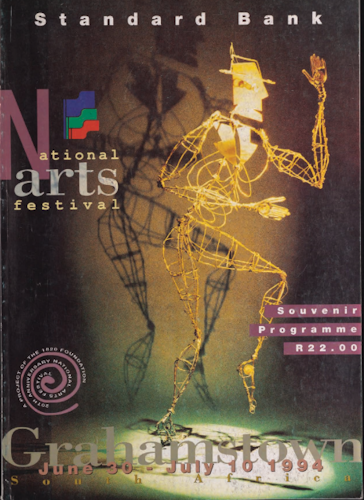
1994 was a year of incredible celebration, not just for the Festival, but for the country as a whole. Earlier that year, South Africa had held the first general election in which all races and ethnicities were able to participate equally. Though the Apartheid regime had been coming to an end for several years, these elections signified both a definitive ending, and a hopeful new beginning. This sense of celebration, reflection, and reconciliation naturally carried over into both the National Arts Festival’s official programme and the Fringe. As the Festival Committee’s Chairman expressed: “Over the past few months this country…Read More

1995
1995

As is often the case, there were a number of programme elements in 1995 that beautifully showcased the arts’ unique ability to encapsulate moments of history and culture. One such installation was the work of that year’s Standard Bank Young Artist for Visual Art – Jane Alexander. Working primarily in plaster, Alexander was interested in socio-political integration and issues of inheritance. Her work probed the question of how “self-awareness impacts on integration and the establishment of a new society,” while encouraging the viewer to observe without judgement. Another special piece of work was the play Marabi at Graeme College. Written…Read More

1996
1996
1996

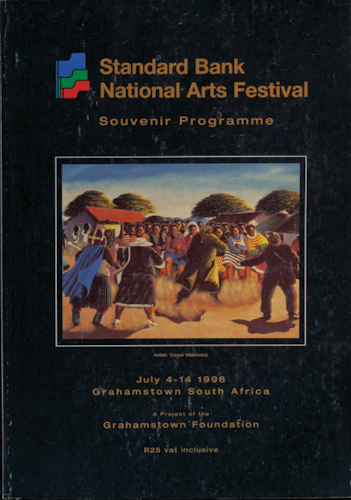
 In August of 1994, the 1820 Settler’s Monument had been devastated by a fire which left much of the building seriously damaged. Extensive renovations were undertaken, including a redesign of the Guy Butler Theatre, and in May of 1996 the building was re-dedicated by then-President Nelson Mandela. Parts of the old fire damaged walls were left in place, and can still be spotted by sharp-eyed Festival goers today! But the President’s visit was more than a moment of great pride for the Festival team. It represented the growing sense that the National Arts Festival had reached a point of national…Read More

The South African Constitution Adopted

South Africa formally adopts its new Constitution, widely regarded as one of the most progressive in the world. It enshrines a comprehensive Bill of Rights, guaranteeing equality, dignity, and freedom for all citizens. The Constitution establishes the legal and institutional framework for a democratic society grounded in accountability and the rule of law. This milestone represents a foundational moment in the country’s transformation, embedding the values of human rights and social justice at the heart of governance.

1997
1997
1997

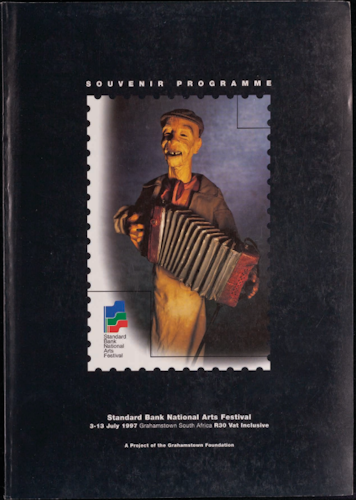
In a particularly candid and comprehensive programme note, Professor Alan Crump addressed some of the concerns that had been raised by members of the public and media over the past few years. Reading it today, it is striking to see how many of the challenges faced by the Festival in 1997 still strike a chord today. He describes a delicate balancing act that the Festival has had to consider every year since its inception: “During a time when so many involved in cultural pursuits in this country are battling to survive, the Standard Bank National Arts Festival Committee is proud…Read More

1998
1998
1998

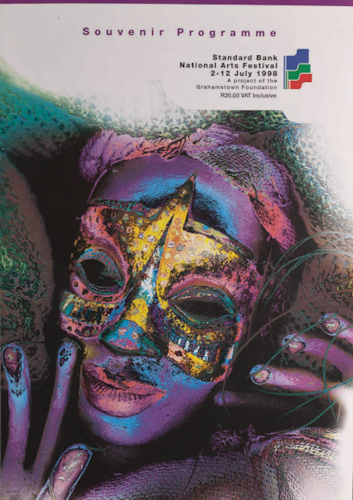
 Despite being well into its third decade, the 1998 Festival boasted a number of exciting firsts! On the Curated Drama programme there were no fewer than eight plays written by South Africans. Of the total of 11 productions, seven were premieres. Brazilian actress and playwright Denise Stoklos made her first appearance in our country, as did Pulitzer Prize winning dramatist August Wilson. The State Theatre Ballet, now in its 35th year, came to Makhanda for the very first time, and Brett Bailey brought Ipi Zombi. Elsewhere in the programme were more familiar faces:, Reza de Wet and Marthinus Basson staged…Read More

1999
1999
1999

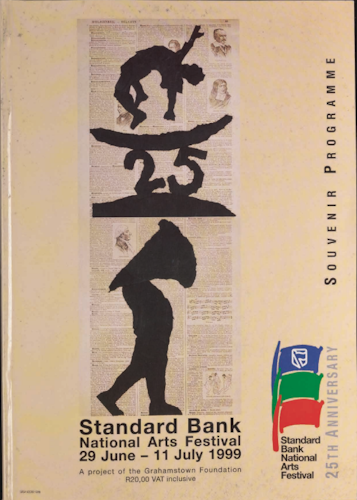
To mark the occasion of the 25th anniversary of the National Arts Festival, the programme opened with an address from a very special patron: “As patron of the 1999 twenty-fifth anniversary Standard Bank  National Arts Festival, it is a pleasure to welcome festival-goers to Grahamstown. Over the years, the arts have played a critical part in bringing together South Africans of all social, economic and community groupings. Under the auspices of the Grahamstown Foundation, the National Arts Festival has grown from small beginnings in 197 4 into one of the best-known arts festivals in the world. The organisers have pursued…Read More

2000
2000
2000

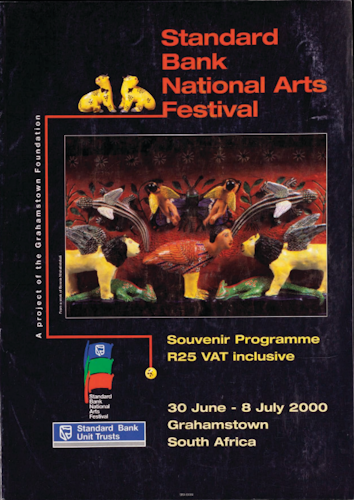
The first festival of the new millennium contained an incredible 227 live performances! The festival committee in that year was a powerhouse of well-known professionals, including: Mannie Manim, Guy Butler, Richard Cock, Marthinus Basson, Khayalethu Lennox Faba, Ingrid Fiske, Vicki Karras, Melanie Hillebrand, Sibongile Khumalo, Mokale Koapeng, Ramolao Makhene, Tale Motsepe, Sydney Selepe, Lara Foot, Andrew Verster, Trevor Steele Taylor, and Peter Voges. The State Theatre Ballet presented The Merry Widow, and the City Theatre and Dance Group staged Robyn Orlin’s ‘daddy, I’ve seen this piece six times before and I still don’t know why they’re hurting each other.’ This…Read More

2001
2001
2001

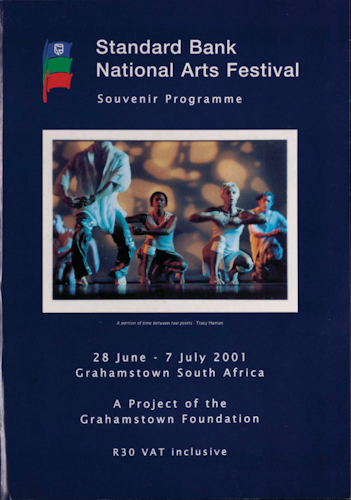
2001 was the 18th, and final, year of the Standard Bank National Arts Festival. The bank continued its sponsorship of the festival in several more niche areas, but was no longer the named sponsor of the Festival as a whole. Standard Banks CEO wrote a farewell of sorts, commemorating the banks long partnership with the National Arts Festival and the Grahamstown Foundation: “The long association with this Festival has been richly rewarding for the bank. It has enabled us to enjoy a strong association with philosophies and pursuits which have a positive bearing on our organisation. We have enjoyed being…Read More

11 September Attacks

Coordinated terrorist attacks in the United States reshape global geopolitics, security frameworks, and economic systems. The impact is felt worldwide, influencing international relations, travel, trade, and policy environments. For South Africa, as part of the global economy, these shifts contribute to changing dynamics in security, diplomacy, and economic interdependence, highlighting the increasing interconnectedness of global events and their local implications.

2002
2002
2002

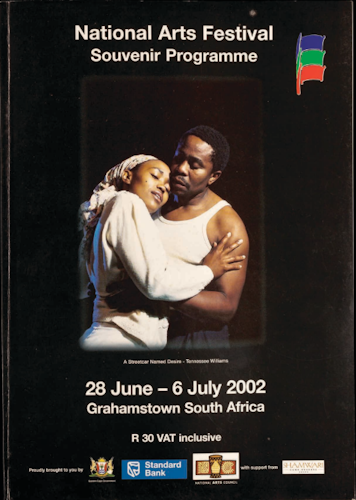
As had been hoped, new sponsors were able to step into play as Standard Bank withdrew. In 2002, and for the first time in its history, the National Arts Festival received a significant amount of its sponsorship from provincial government and the National Arts Council. Not only was this significant as the beginning of a long and fruitful partnership between the Eastern Cape Department of Sport, Recreation, Arts and Culture, it also clearly signalled the economic potential of a project of this scale. MEC Nosimo Balindlela recognised this in her welcome note, asserting her belief that the National Arts Festival…Read More

2003
2003
2003

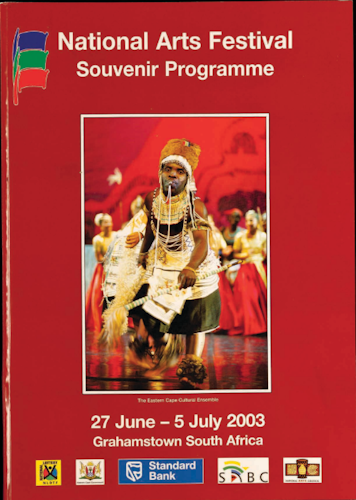
Building on the success of the previous year’s model, 2003 saw two new sponsors added to the partnership that already included the NAC, EC DSRAC and Standard Bank. This year, the National Lotteries Distribution Trust and the SABC joined the partnership, reflecting the degree to which the Festival had truly become a national event. In order to succeed, the Festival relies on sponsors who truly understand the ethos and ends of our organization, which were beautifully reflected in SABC CEO Peter Matlare’s programme address: “The SABC, as the public broadcaster, considers that arts and culture, in their broadest sense, are…Read More

J.M. Coetzee wins Nobel Prize in Literature

J. M. Coetzee is awarded the Nobel Prize in Literature, celebrated for his incisive and often unsettling explorations of power, identity, and human ethics. As one of South Africa’s most internationally acclaimed writers, Coetzee’s recognition underscores the country’s continued literary excellence in the democratic era. His work contributes to global conversations about justice, responsibility, and the lingering psychological impacts of historical systems such as apartheid.

2004
2004
2004

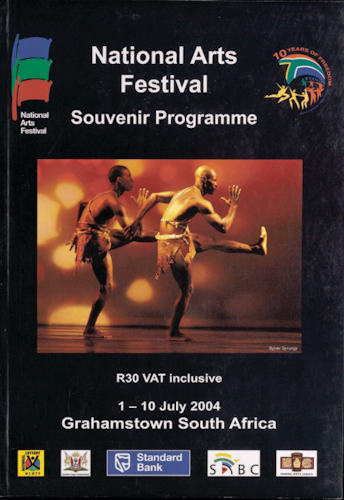
2004 was a year of milestones – South Africa celebrated 10 years of democracy, the National Arts Festival celebrated its 30th birthday, and Rhodes University celebrated its 100th year. In art, as in life, the celebration was also touched with sadness, as we bid farewell to a beloved member of the Festival family. Mr Ramolao Makhene, who served on the Committee of the National Arts Festival for 15 years, passed on the 13 July 2003, very shortly after the end of that year’s festival. Having been an integral part of the programme planning and curation for an extended period, he…Read More

2005
2005
2005

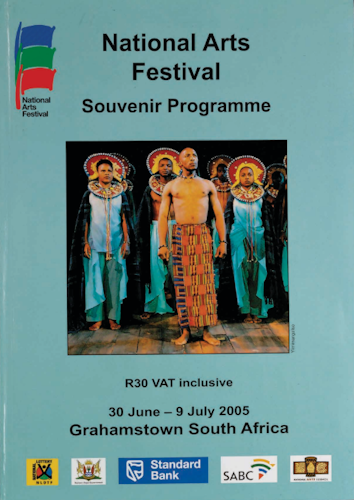
  Mannie Manim, who had by now been Festival Chairman for several years, used his programme note in 2005 to encourage festival goers to visit the Fringe events. It was certainly true that the Fringe programme had continued to grow in leaps and bounds over the years. As Fringe work is completely self-funded, or at least reliant on Fringe artists finding their own sponsors and grants, a robust, healthy and varied Fringe programme is possibly one of the greatest markers of the health of a festival like ours, and an indication of the state of the arts in the county…Read More

2006
2006
2006

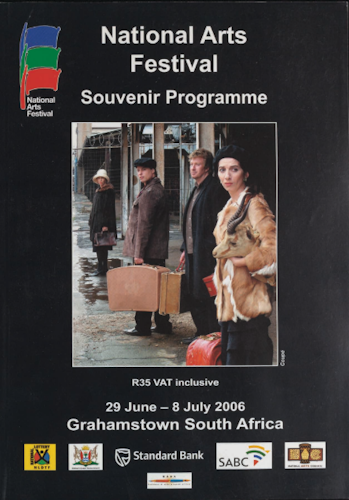
A familiar name appears in a surprising place in the 2006 programme! Former Artistic Advisor, Roy Sargaent appears in a new capacity – as director of Artscape’s The Boy Who Fell From the Roof. Another familiar name should be Churchill Madikida, the 2006 Young Artist for Visual Arts. His exhibition Like Father Like Son? was a bold exploration of a difficult subject, which remains hauntingly relevant in our societies today: “It is widely acknowledged that children need structure, security, stability and attachment to develop and flourish. Issues such as high divorce rates, new family structures, increased mobility, women’s liberation etc.…Read More

2007
Launch of the iPhone

The iPhone is unveiled, marking a major turning point in global technology and communication. The device revolutionises how people interact with information, media, and each other, accelerating the rise of the digital economy. In South Africa, as elsewhere, mobile technology rapidly expands access to communication and services, transforming industries, business practices, and everyday life, and opening new opportunities for innovation and connectivity.

2007
2007

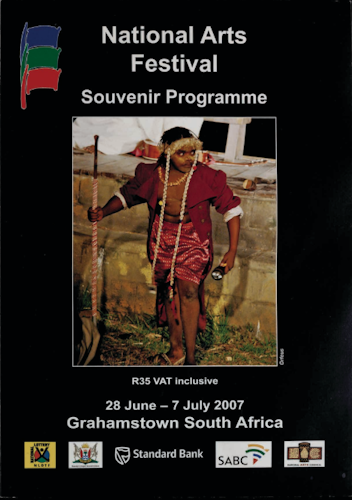
For many years, the Jazz programme had been a favourite amongst festival audiences. Despite withdrawing as the primary sponsor, Standard Bank continued to sponsor more niche elements of the programme, including the Standard Bank Jazz Festival, and the Youth Jazz Festival. The Jazz programme, always vibrant and varied, includes performances from seasoned professional to emerging students, local artists and international guests, and everyone in between! In 2007, the lineup included husband and wife duo Nathasha Roth and James Scholfield, the Dutch Jazz Connection – an ensemble from the Netherlands – and the Swiss/South African Quintet. School and Youth bands were…Read More

2008
2008
2008

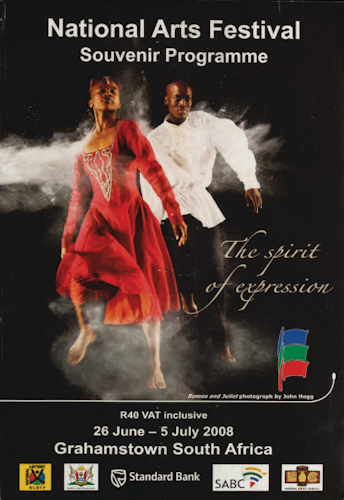
Two significant changes were afoot in the tight knit Festival team in 2008. We were in the processing of bidding farewell to Lynette Marais, our Festival Director, who was entering a well-deserved and hard-earned retirement. Lynette had steered the Festival ship remarkably for more than two decades. As Ayanda Mjekula, Chairman of the National Arts Festival Board wrote: “we are certainly going to be poorer without her passion for the arts, her tenacity and the energy with which she goes about staging the Festival each year.” In the midst of this goodbye, however, we were also wishing a very warm…Read More

2008 Wall Street Collapse

The collapse of Lehman Brothers triggers a global financial crisis, leading to widespread economic instability and recession. South Africa experiences significant knock-on effects, including slowed economic growth, job losses, and increased financial pressure on households and businesses. The crisis underscores the country’s integration into global financial systems and highlights the vulnerability of emerging economies to international market fluctuations.

2010
2010 FIFA World Cup

South Africa becomes the first African host for the tournament. The event represents a moment of national pride and global visibility for South Africa, showcasing its infrastructure, culture, and organisational capacity. Beyond sport, the World Cup stimulates investment, tourism, and international engagement, leaving a lasting legacy in infrastructure development and positioning the country as a capable host of major global events.

2012
2012
2012

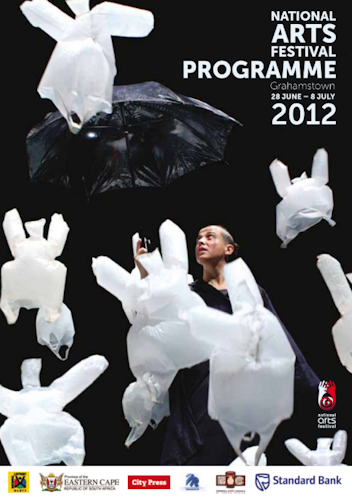
Seasoned festival attendees might have noticed that, in 2012, the programme was slightly edgier and more daring than it had been in the past. Explaining this choice, the new Chairperson of the Artistic Committee Jay Pather, explored the role of the Festival, and the arts, in the contemporary political landscape:      “In our deliberations at the National Arts Festival, the number of applications that we receive is demographically skewed. It is a sad reflection of how far we have come (or rather, not) in attempts at education and development, redress and funding opportunities. A disturbing trend recurs. Young black artists emerge…Read More

The Marikana Massacre

The Marikana massacre occurs when police open fire on striking mineworkers, resulting in significant loss of life. The event shocks the nation and draws attention to ongoing issues of inequality, labour relations, and economic justice in post-apartheid South Africa. It prompts widespread debate about governance, corporate responsibility, and the lived realities of workers, becoming a critical moment of reflection on the country’s democratic progress.

2013
2013
2013

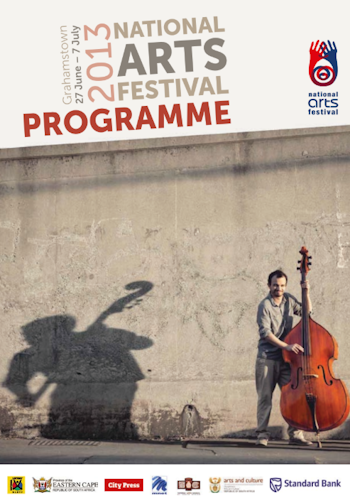
Where Jay Pather’s welcome to the 2012 Festival highlighted the innovation of that year, his greeting in 2013 was more what he himself called “a call to realism.” The 2013 programme was burdened by many of the same cares that affect the National Arts Festival, and arts organisations nationwide, today. A lack of funding, coupled with a lack of clarity and slow delivery of the available funding, resulted in a programme in which, tragically, many works were proposed and accepted by the Artistic Committee, but were subsequently unable to be brought to fruition. As Jay described this: “in sum what…Read More

The death of Nelson Mandela

Nelson Mandela passes away, prompting an outpouring of grief and remembrance across South Africa and the world. His death marks the end of an era and invites reflection on his enduring legacy of leadership, reconciliation, and moral courage. Memorials and tributes highlight his global influence, while within South Africa, his passing reinforces the ongoing responsibility to uphold the values he championed.

2015
2015
2015

VIBRANT FORCE FOR ADVOCACY AND CHALLENGING THE CONSCIENCE – A message from the Artistic Committee “The 2015 programme of the National Arts Festival has been shaped by diverse threads: the heated national debate surrounding the legacies of South African history; significant anniversaries of a number of arts icons; the global public engagement concerning the limits of creative liberty; and the Festival’s commitment to free expression and to human dignity. We pride ourselves on providing opportunities for South African artists to take creative risks in expressing themselves with integrity about matters that concern them. We recognise the arts as vibrant forces…Read More

Fees Must Fall

The Fees Must Fall movement gains national momentum as students protest rising tuition fees and broader inequalities in higher education. The protests spark widespread debate about access, transformation, and the legacy of structural inequality in post-apartheid South Africa. The movement leads to significant policy responses and remains a defining moment in contemporary student activism and civic engagement.

2016
2016
2016

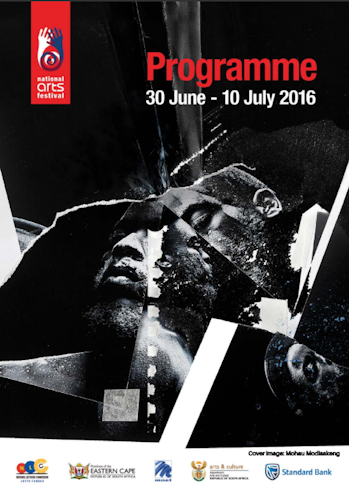
In his final year as Artistic Director, Ishmail Mohammed had organized the 2016 programme into Curatorial Strands – themes running through the diverse programme elements, allowing it to be understood both in parts and as a whole. These six Curatorial Strands were: Celebrating Women; Conflict & Resolution; the Politics of Identity; Legends & Legacies; Re-imagining Classics; and Art for Art’s Sake. Each of these strands was intended to entertain, inspire and challenge, in ways best suited to the nature of each piece. Within these strands, the Curated programme included Scorched with Jaques de Silva and Cherae Halley; The House of…Read More

2017
2017
2017

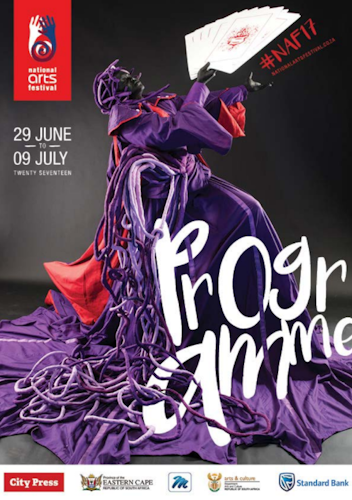
Introducing… the Festival of Ale! For the first time, the National Arts Festival had its own signature drinks. In partnership with the Featherstone Brewery, we crafted the Festival Ale so that thirsty patrons, tired technicians and excited artists could look forward to something cold, frosty, and truly special at the end of each day! The programme also included a lovely dedication to the Fringe, written by our own Ayanda Mjekula, Chairman of the National Arts Festival Board: “70 years ago a collective of artists, feeling ignored and neglected by mainstream arts institutions and festivals in the UK, created a ‘fringe’…Read More

2018
2018
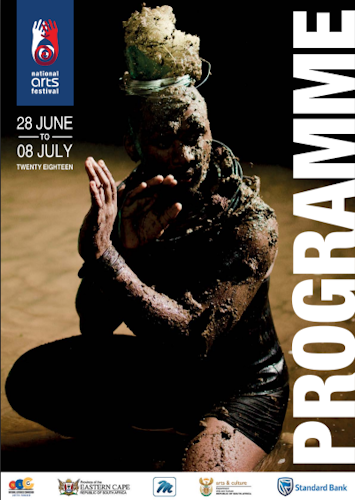
2018

With an ale unveiled the year before, you might be forgiven for thinking the Festival could have nothing more exciting up its sleeve for 2018. But you’d be wrong! This year, the Festival hit the digital ground running with the launch of the brand new app! Not only could audience members now book tickets with just a tap on the screen, it was also possible to stay up to date with award winners and reviews, as well as to explore Grahamstown with a selection of handy maps and live updates on the Festival Hoppers. For the first time, the arts…Read More

2020
COVID – 19 Pandemic

COVID-19 is declared a global pandemic, triggering unprecedented public health measures and widespread economic disruption. South Africa implements strict lockdowns, profoundly affecting businesses, cultural institutions, and daily life. In response, the National Arts Festival adapts by presenting its programme in a fully digital format for the first time over the following two years, ensuring continuity while reaching new and geographically dispersed audiences. As conditions evolve, the Festival continues to adapt to a changing cultural landscape, reshaping itself to expand access and support greater equality of representation. This moment marks not an endpoint, but an ongoing transition, as the Festival’s story…Read More

2025
Wole Soyinka wins Nobel Prize in Literature

Nigerian writer Wole Soyinka is awarded the Nobel Prize in Literature, becoming the first African recipient of the honour. His recognition signals a major moment for African literature and intellectual thought on the global stage, affirming the cultural and political significance of African storytelling. For South Africa and the broader continent, this achievement underscores the growing international visibility of African voices during a period of intense political struggle and cultural expression.